Each of our speakers brings a story worth hearing. They are scientists, conservationists, veterinarians, breeders, and experts who dedicate their lives to protecting parrots and their habitats.
From the most remote corners of the world to the most advanced research centres, their ideas, discoveries, and personal experiences invite us to reflect, take action, and dream of a fairer world for birds.
At this congress, their knowledge becomes a driving force for change.
Meet them here!
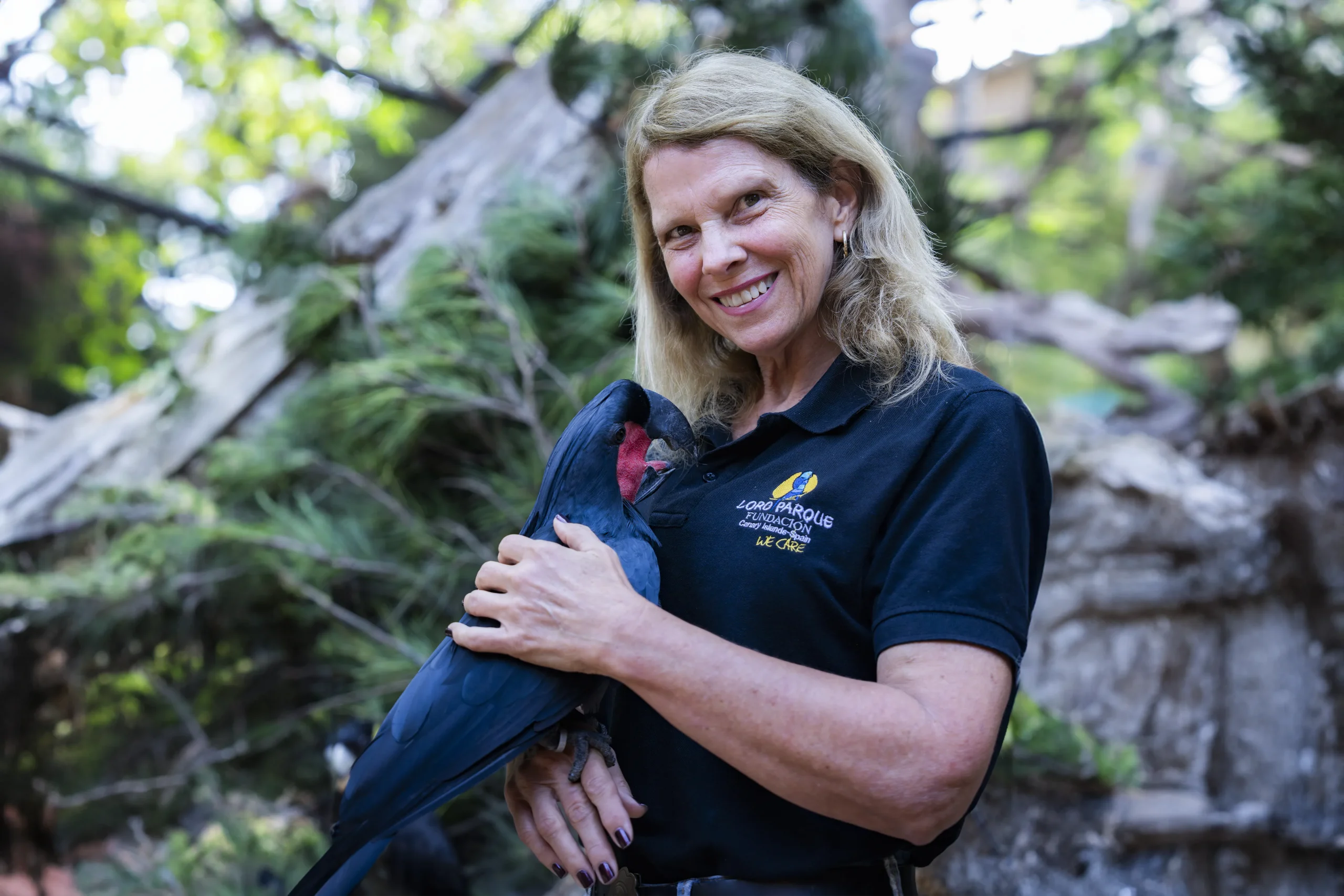
Country : Brazil/Spain
Presentation : Breeding and Management of Complex Parrot Species
Biologist with a postgraduate degree in wildlife, breeding, and management, she worked for 26 years in Brazil with breeding under human care, always prioritizing research and the refinement of reproductive techniques. By managing zoos and Brazil’s leading psittacine breeding centres, she achieved excellent results that have been published in various media outlets.
For the past nine years, she has led the bird team at Loro Parque Fundación, after accepting the invitation to become bird curator at both Loro Parque and Loro Parque Fundación. There, she has been adapting and applying breeding methodologies to the current context. She believes that, beyond the importance of building a strong and unified team, the development, adaptation, and application of specific methodologies for each breeding situation and species is key to achieving successful outcomes.
She strongly believes that the union of efforts should be valued not only within the Fundación itself but also between teams from different countries and those working directly with birds in the wild—so as to obtain the best possible results for species conservation.
She is the Management Consultant for the Captive Breeding Program of the Lear’s Macaw, Anodorhynchus leari, a native and threatened Brazilian species, property of the Brazilian Government. Loro Parque Fundación has achieved indisputable breeding success with this species—not only due to its accumulated reproductive expertise but also thanks to the birth of four chicks in the Brazilian caatinga, descended from birds born and raised at Loro Parque Fundación and later transferred to Brazil.
In addition, she is part of the expert advisory group that provides technical support and participates in decision-making for the Population Management Program (PMP) of the blue macaws (Cyanopsitta spixii, Anodorhynchus hyacinthinus, Anodorhynchus leari).
Marcia Weinzettl has given lectures in various parts of the world, sharing her extensive knowledge of complex South American tropical psittacine species, as well as the breeding results obtained at the Fundación and the importance of this knowledge for species conservation.
Marcia will undoubtedly be one of the international references with whom participants will be able to exchange and receive valuable information.
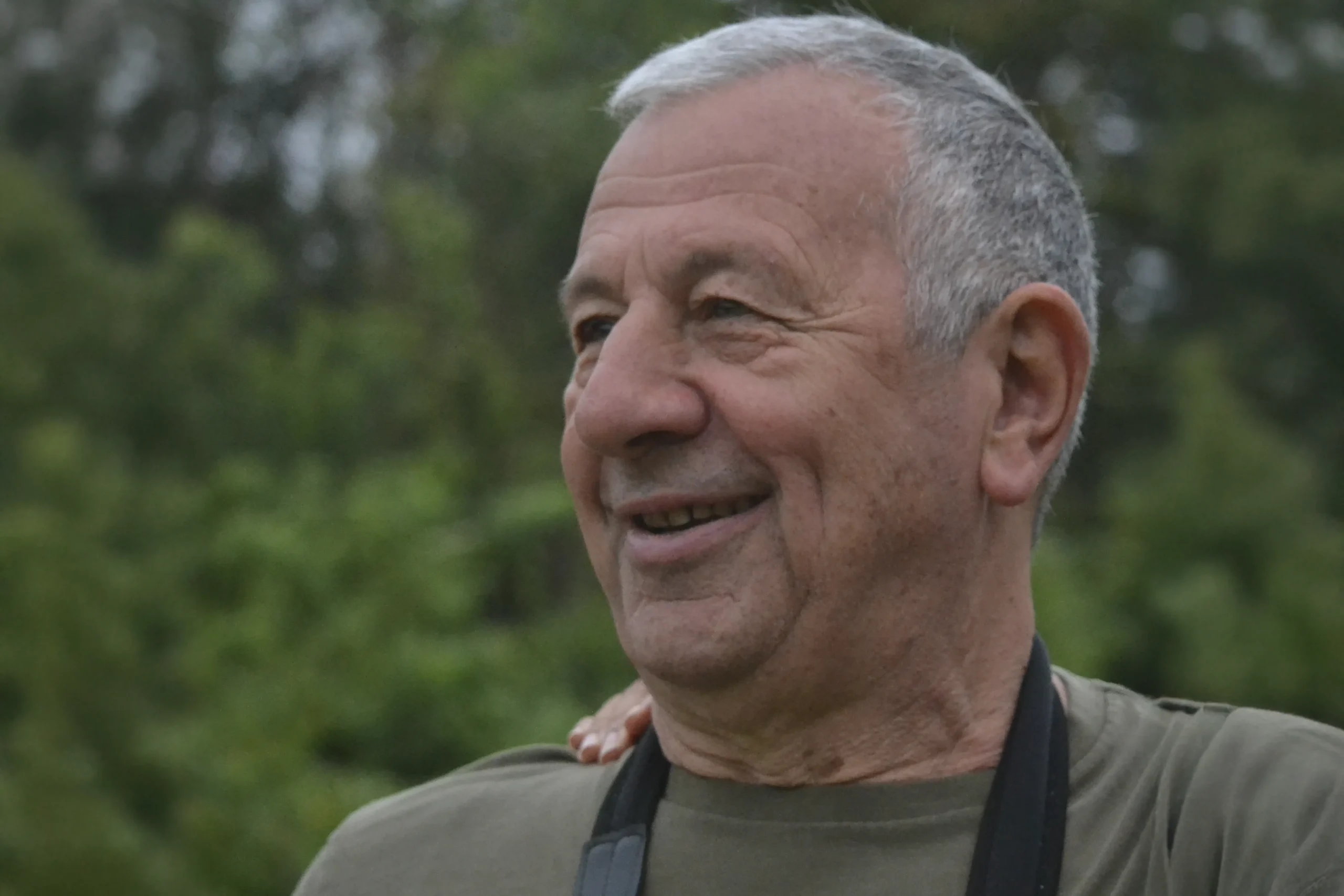
Country : France
Presentation : The commitment of a private breeders association to Parrot Conservation
He became an agrégé professor of Life and Earth Sciences in 1977 and has been retired since 2000. He has been involved in the world of parrots since 1972, working as a private breeder of dwarf macaws. Over the years, he has taken part in several field expeditions that resulted in publications on Ara rubrogenys, Ara glaucogularis and Poicephalus flavifrons between 1990 and 2005.
He served as EEP Coordinator and initiated an in situ conservation project for the Red-vented cockatoo (Cacatua haematuropygia), which he presented at the Loro Parque International Convention in 1998.
He is currently Vice-President of the Conservatoire des Oiseaux Exotiques (CDE), where he oversees both in situ and ex situ conservation programmes focusing on Amazona lilacina, Ara ambiguus guayaquilensis, Ara glaucogularis, Cyanoramphus saisseti, Lathamus discolor, Eunymphicus cornutus and E. uvaeensis.