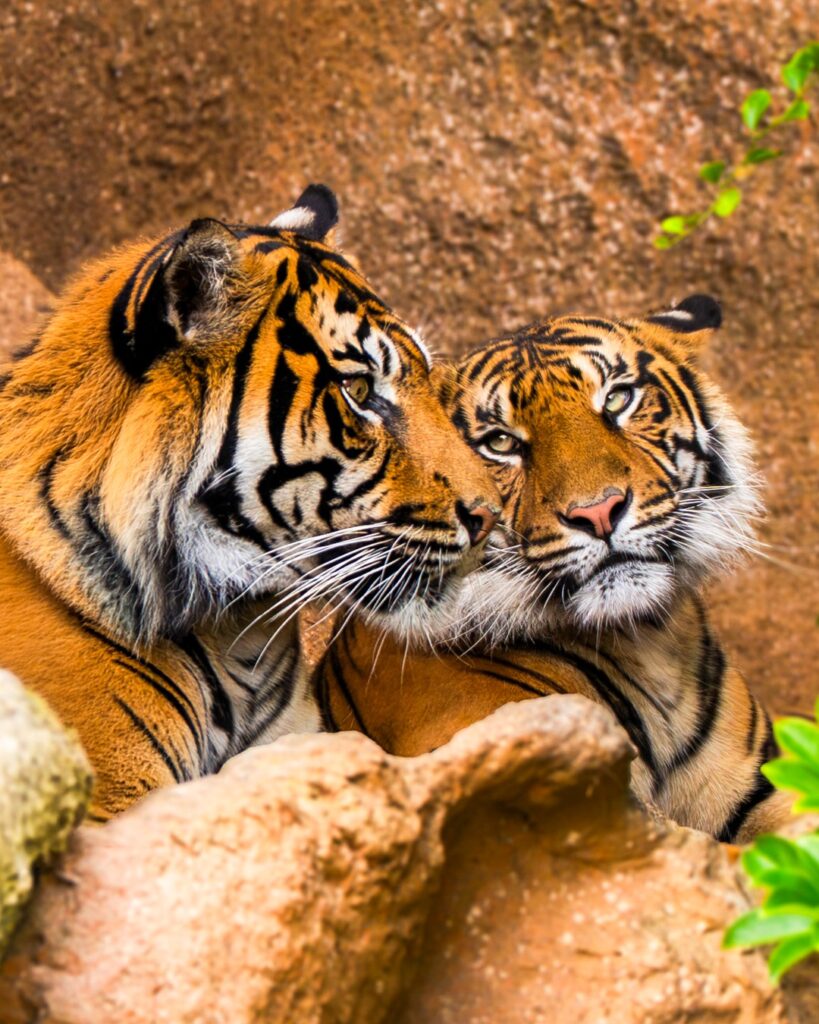
Zaza and Lucu, paired through a rigorous European conservation breeding programme, have arrived in Tenerife from zoos in the United Kingdom at a critical juncture: there are now only between 300 and 400 individuals remaining in the wild
The Javan and Balinese tigers are already extinct, a precedent that underlines the urgency of coordinated conservation programmes to maintain backup populations under human care and raise awareness about the protection of tropical forests.
Loro Parque has welcomed two Sumatran tigers (Panthera tigris sumatrae), the most endangered tiger subspecies on the planet. They are Zaza, a two-year-old female, and Lucu, an eight-year-old male, from different zoos in the United Kingdom, who now form a new pair as part of the European Endangered Species Programme (EEP) run by the European Association of Zoos and Aquaria (EAZA).
The formation of this pair is no accident. Every Sumatran tiger included in Europe’s managed population has a comprehensive genealogical profile, including date of birth, kinship, ancestry, previous transfers and family links, which programme coordinators use to identify which pairings will provide the greatest genetic diversity, whilst avoiding inbreeding. In addition to these scientific criteria, the age, health, temperament and welfare of each animal are taken into account, as well as the practical feasibility of the transfer. Only when all these factors align is the formation of a new pair authorised.
The president of Loro Parque, Wolfgang Kiessling, has stated that “the arrival of Zaza and Lucu reinforces our commitment to the conservation of the Sumatran tiger. Every transfer within a coordinated programme such as the EEP meets very rigorous scientific criteria and highlights the importance of cooperation between modern zoos to protect species that are extremely vulnerable in the wild”.
The Sumatran tiger is the smallest and has the darkest coat of all tiger subspecies, characteristics that reflect its adaptation to the dense, humid tropical forests of the island of Sumatra in Indonesia. Its status in the wild is critical, as there are now barely between 300 and 400 individuals remaining, all confined to this island, where habitat loss and fragmentation, coupled with human population growth, are causing the population to decline by around 40 tigers every decade.
The situation facing the Sumatran tiger is also set against the backdrop of the disappearance of other island tiger subspecies: the Javan tiger and the Balinese tiger are already extinct, a precedent that underlines the urgency of coordinated conservation programmes to maintain backup populations in captivity and raise awareness about the protection of tropical forests.
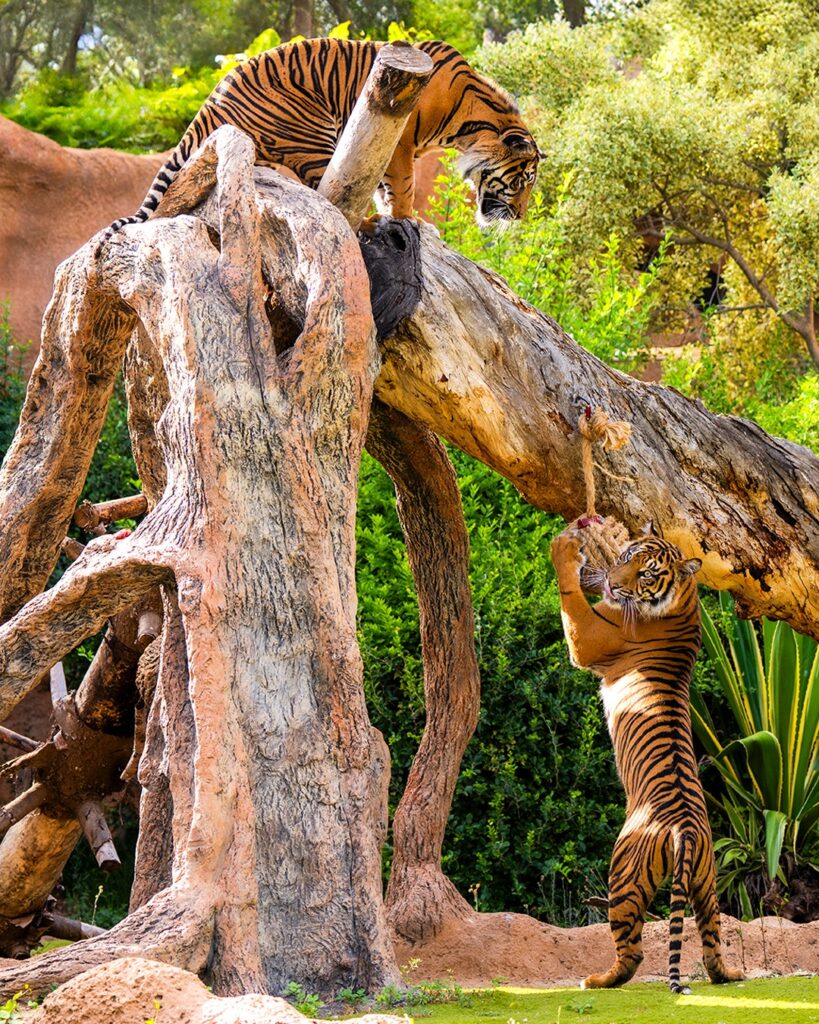
“This is a very important moment for Loro Parque and for everyone involved in the care of these extraordinary animals. Welcoming a new pair of Sumatran tigers represents a long-term commitment, and our priority is to ensure that both animals have the time, space and specialist care they need whilst they adapt to their new home,” said Mike Jordan, zoological director at Loro Parque.
Sumatran tigers are among the rarest tiger subspecies in the world and face constant threats in the wild, such as habitat loss and fragmentation, and poaching. Their close relatives, the Javan tiger and the Balinese tiger, are now completely extinct, so conservation breeding programmes at accredited zoos provide a vital safety net for the species.
Zaza and Lucu will be closely monitored by Loro Parque’s animal care teams as they settle into their new home and get to know one another. Any future breeding will depend on the welfare of both tigers, their compatibility and close coordination with the European conservation breeding programme.
With this new pair, Loro Parque is strengthening its role in the international effort to save the Sumatran tiger from extinction and is offering its visitors the opportunity to get up close to one of the planet’s most iconic and endangered big cats, thereby helping them to understand the importance of protecting the tropical forests on which the species’ survival depends.