Blue-headed macaw
Primolius couloni
Blue-headed macaw
Primolius couloni
Primolius couloni
The blue-headed macaw is one of the least-known macaw species in South America. Its distinctive blue head contrasts strikingly with the predominantly green plumage of its body, giving it a truly unmistakable appearance among the Amazon’s parrots.
Unlike more conspicuous and vocal macaws, such as the blue-and-yellow macaw or the scarlet macaw, this species is generally shy and cautious. As a result, it is notoriously difficult to observe in the wild, even within its natural range.


WEIGHT
206 — 294 g

DIET
Herbivorous

DISTRIBUTION
Bolivia, Peru, with occasional records in Brazil

INCUBATION
25 — 26 days
WEIGHT
207 — 294 g
DIET
Herbivorous
DISTRIBUTION
Bolivia, Peru, with occasional records in Brazil
INCUBATION
25 — 26 days
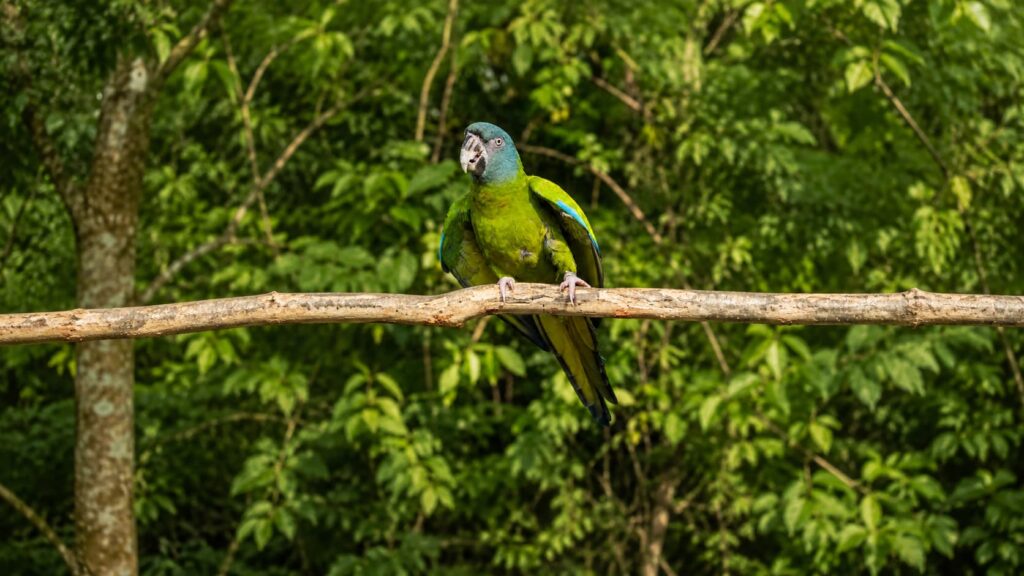
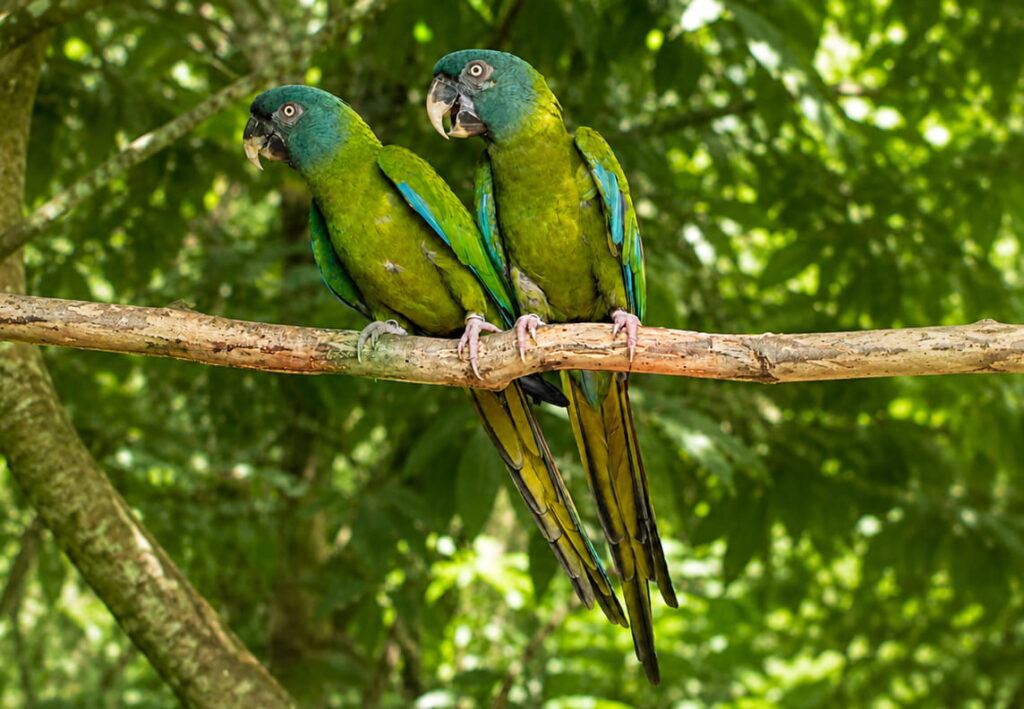
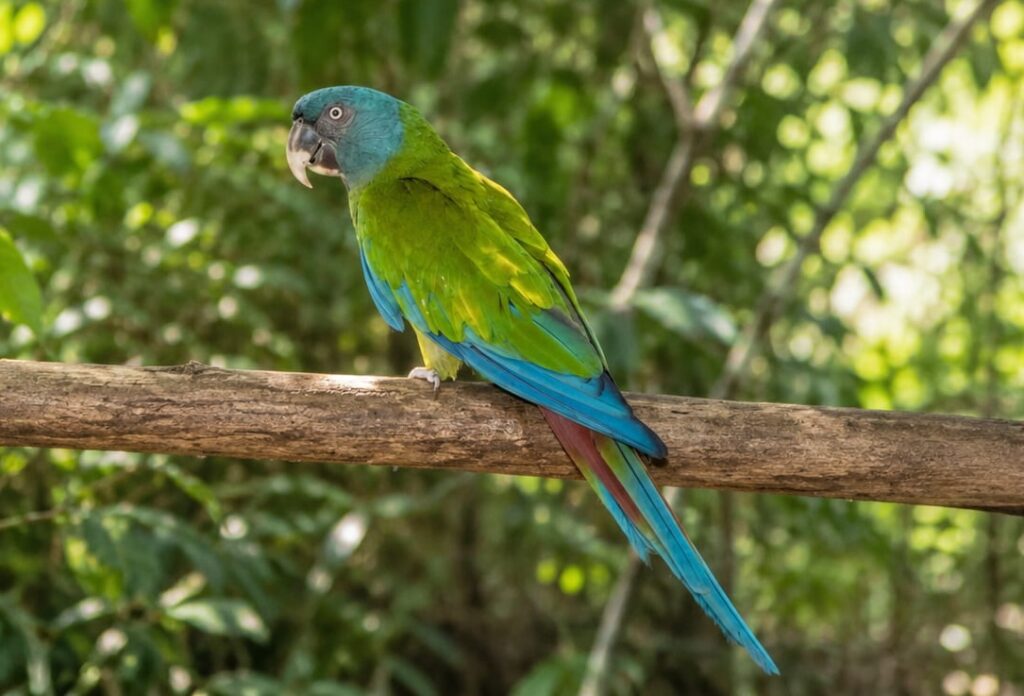
Primolius couloni is a medium-sized macaw, reaching approximately 41 cm in length and weighing between 207 and 294 g. Its plumage is predominantly green, while the head displays distinctive blue tones, the feature from which the species takes its common name.
The flight feathers are also blue, whereas the tail begins with muted reddish tones that gradually transition to blue at the tip. The undersides of both the wings and tail are yellow.
Its bill is black with greyish tones and is specially adapted for handling seeds and fruits of varying hardness. Like other macaws, it has zygodactyl feet, enabling it to grasp food securely and move with ease through the forest canopy.
Very little is known about the diet of this species in the wild. It feeds on fruits and seeds at both mature and developing stages, adapting its diet according to seasonal resource availability.
It has also been observed feeding on tree bark, a behaviour reported in several parrot species. In addition, blue-headed macaws gather at collpas to consume clay, which provides essential minerals that are not readily available through their regular diet.


The blue-headed macaw is a diurnal species, most often seen in small groups of two to five individuals. Juveniles are frequently observed accompanying adults at feeding sites. In some areas, the species may exhibit nomadic movements in response to climatic conditions and seasonal food availability.
Its vocalisations are pleasant and highly varied, distinguishing it from the calls of larger macaw species. When visiting clay licks, known locally as collpas, it tends to avoid the large gatherings of other parrots, instead forming small groups in the lower sections of the clay banks, either with members of its own species or alongside small groups of other parrots.

Little is known about the breeding behaviour of the blue-headed macaw. However, it is known to nest in natural tree cavities. The incubation period lasts between 25 and 26 days, with clutches typically consisting of two to four eggs. This information has been obtained from birds under human care.
One notable characteristic of this species is its ability to reach sexual maturity at a relatively young age, with some individuals breeding before the age of five when conditions are favourable.
Under human care, the blue-headed macaw remains an uncommon species, and only a limited number of specialised zoological institutions have successfully established stable breeding programmes.

The blue-headed macaw occurs primarily in Bolivia and Peru, with occasional records from Brazil. It inhabits humid lowland tropical forests, particularly areas close to rivers, forest edges and natural clearings surrounded by vegetation, allowing it to move through the landscape while remaining under tree cover.
It has been recorded at elevations of up to 1,550 metres, although most observations have been made below 500 metres. While it relies on well-preserved forest habitats, it has occasionally been recorded near human settlements and on the outskirts of urban areas.


A macaw that is difficult to spot
Early breeding
A name in honour of a naturalist
As part of our educational and awareness work on biodiversity, we have developed an encyclopaedia about cetaceans. This comprehensive document offers scientific data and insights into their behaviour, as well as the myths and facts surrounding these fascinating animals.

Certificado de bienestar animal de la Asociación Británica de Agentes de Viajes (ABTA)

Certificado Europeo por la Responsabilidad Ambiental desde 2005

Certificado Humane Conservation con la máxima calificación al mejor parque zoológico de Europa American Humane Association (AHA) EEUU

Certificados desde 2008 por el Instituto de Turismo Responsable y desde 2021 cumpliendo con las acciones Biosphere LifeStyle alineadas con los 17 Objetivos de Desarrollo Sostenible de la Agenda 2030 de las Naciones Unidas

ISO 9001 – Certificado TUV Rheinland Sistema de gestión de calidad certificado respecto a la norma ISO 9001 desde 2013 ISO 14001 y Certificado TUV Rheinland por el alto respeto al Medio Ambiente desde 2005