Its vocalisations are loud and can be heard over long distances, facilitating communication between individuals in dense forest environments
Blue-and-yellow macaw
Ara ararauna
Ara ararauna
The blue-and-yellow macaw also known as the blue-and-gold macaw is one of the most recognisable parrot species in the world thanks to its striking combination of deep blue and golden yellow plumage. Native to the forests and wooded savannas of Central and South America, it stands out for its intelligence, strong pair bonds and powerful vocalisations.

WEIGHT
1,040 – 1,286 g

DIET
Herbivorous (frugivorous-granivorous)

ORIGIN
Central and South America

INCUBATION
24 – 28 days
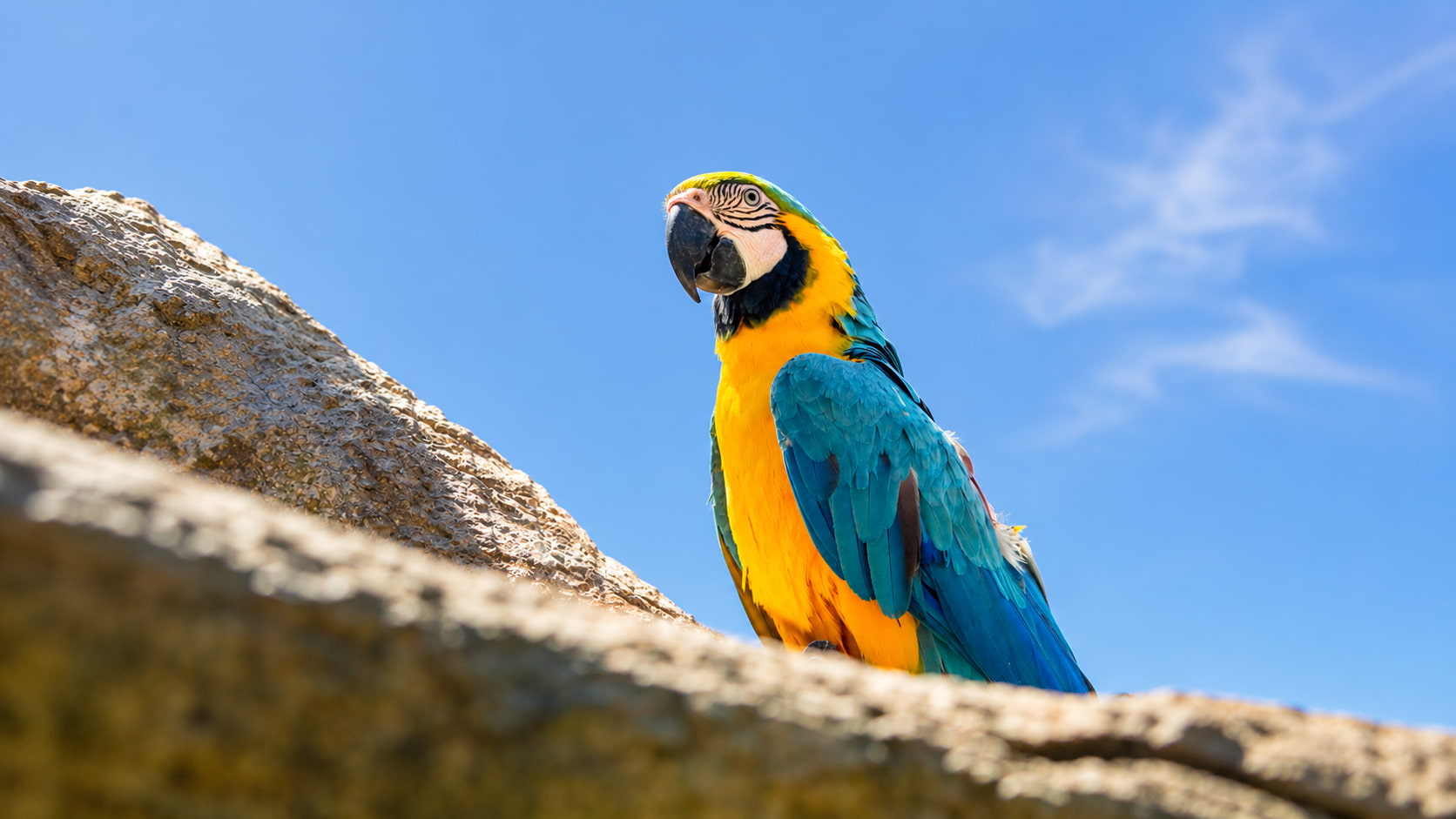
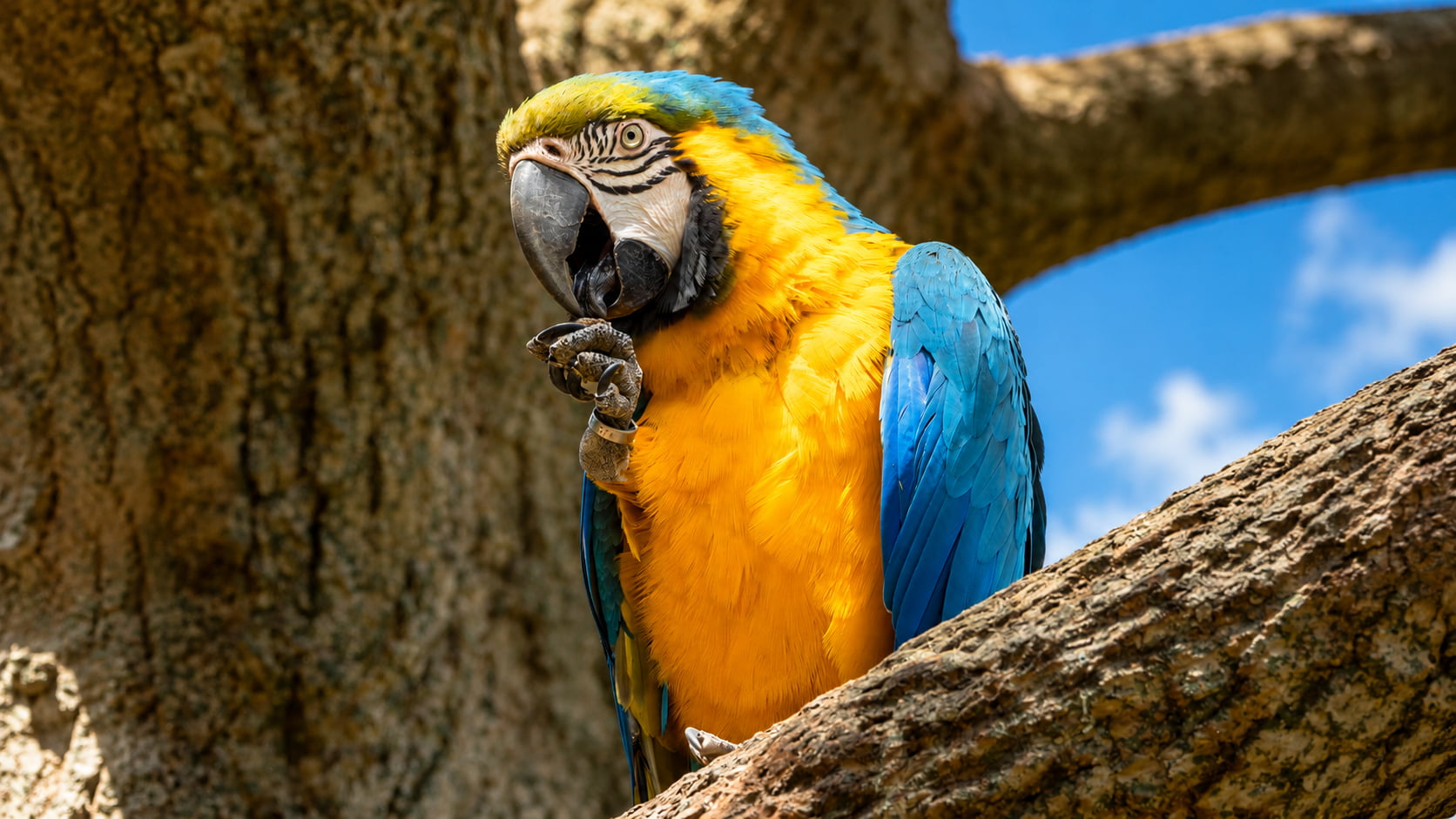
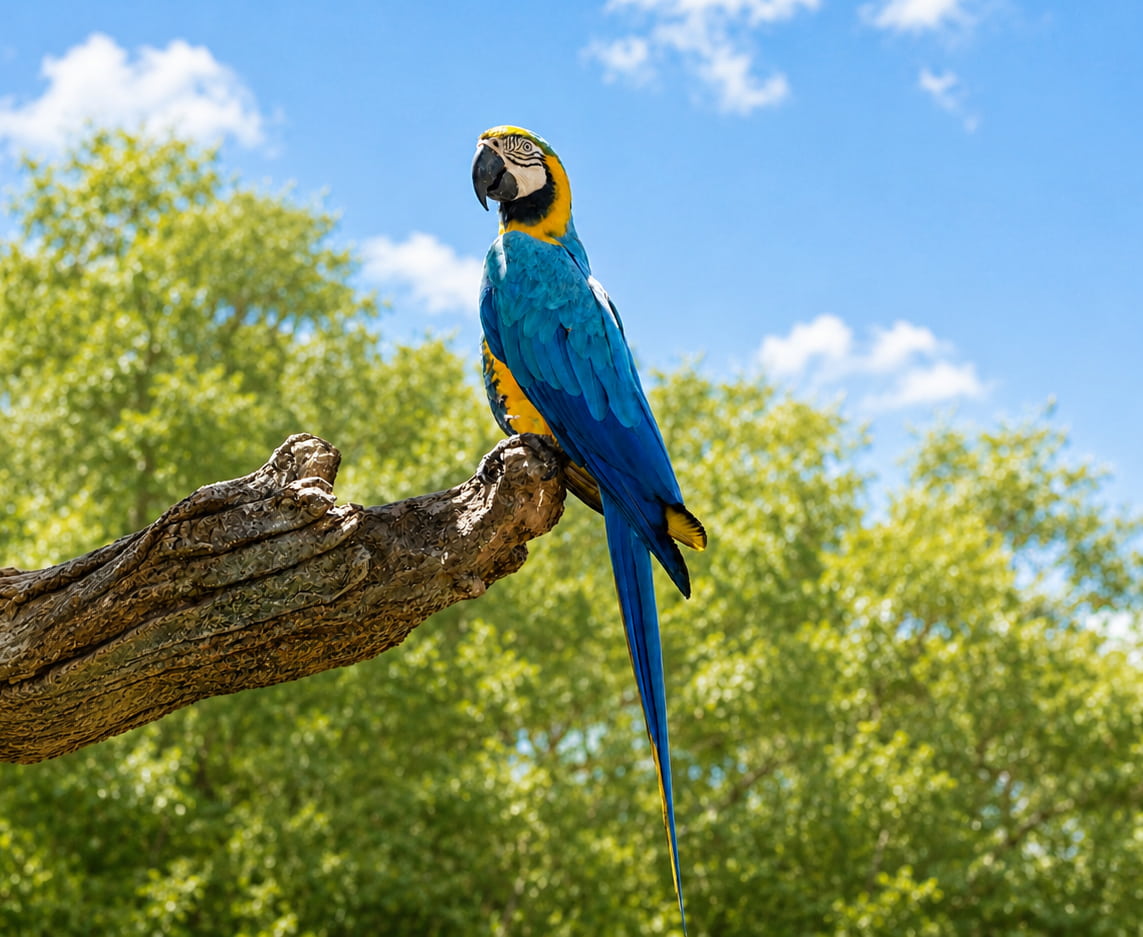
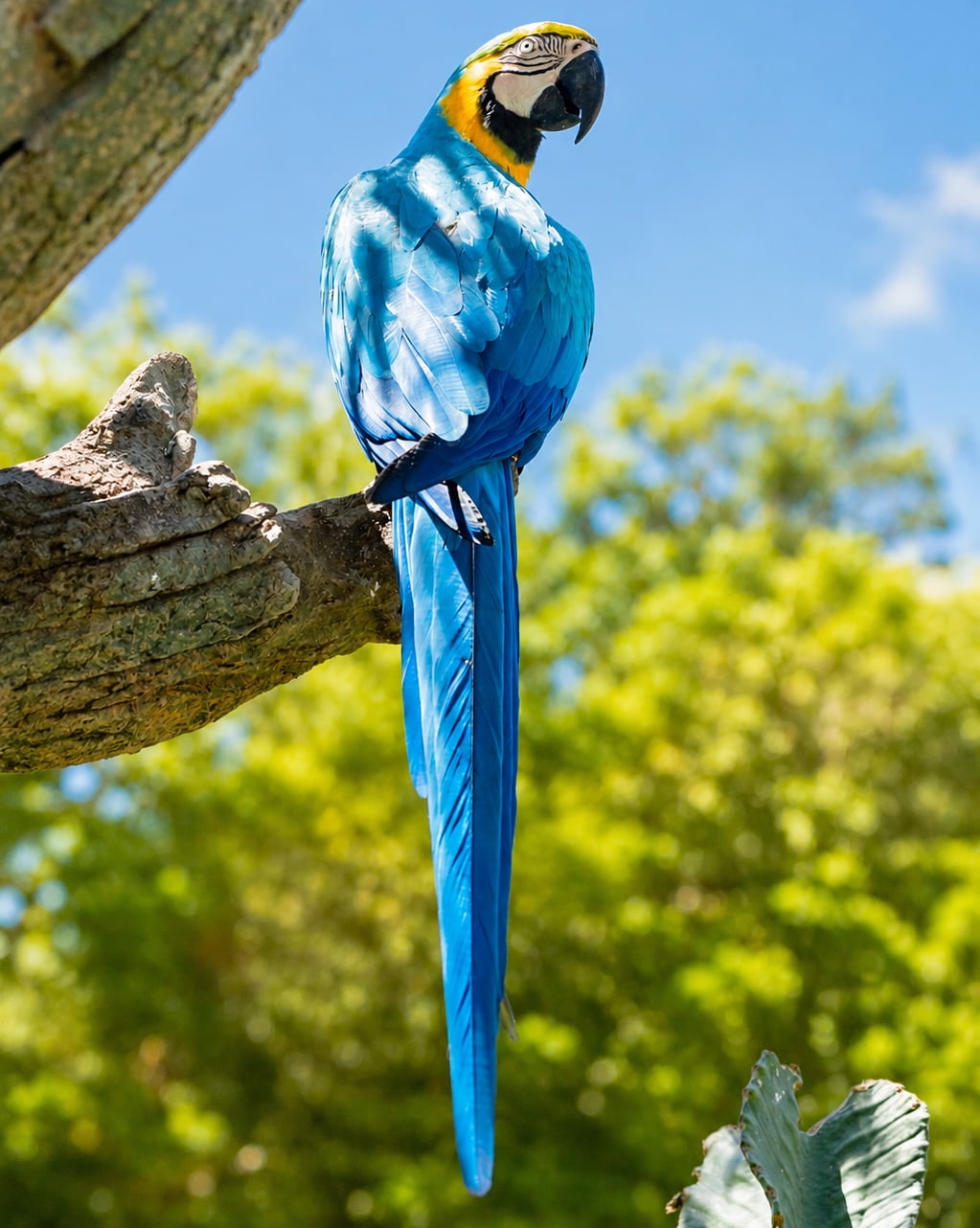
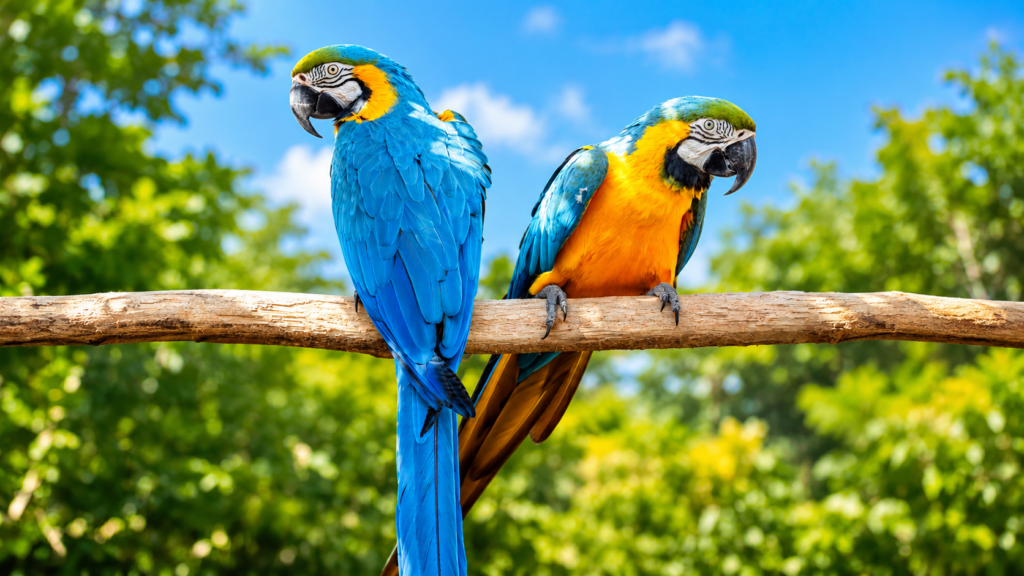
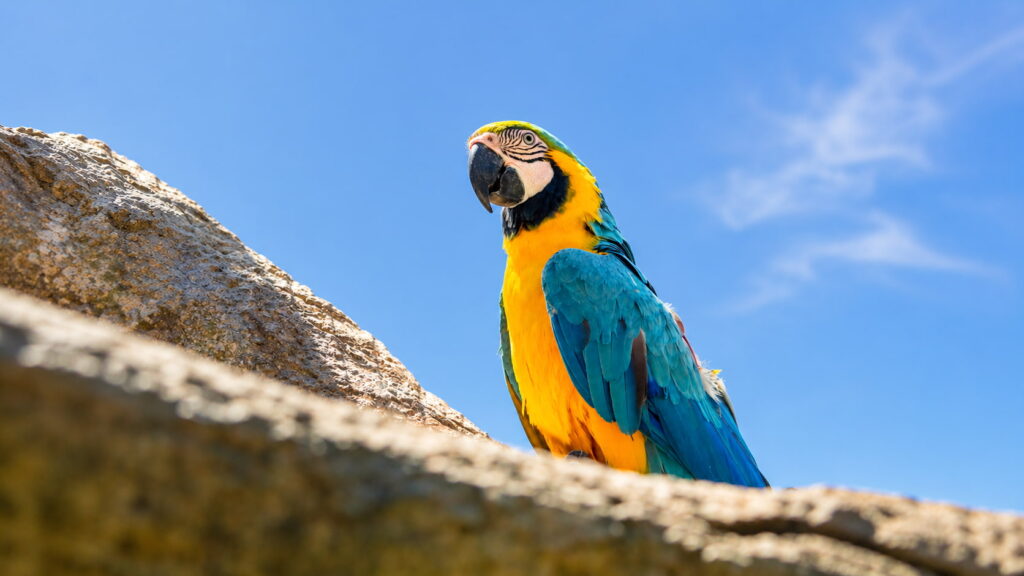
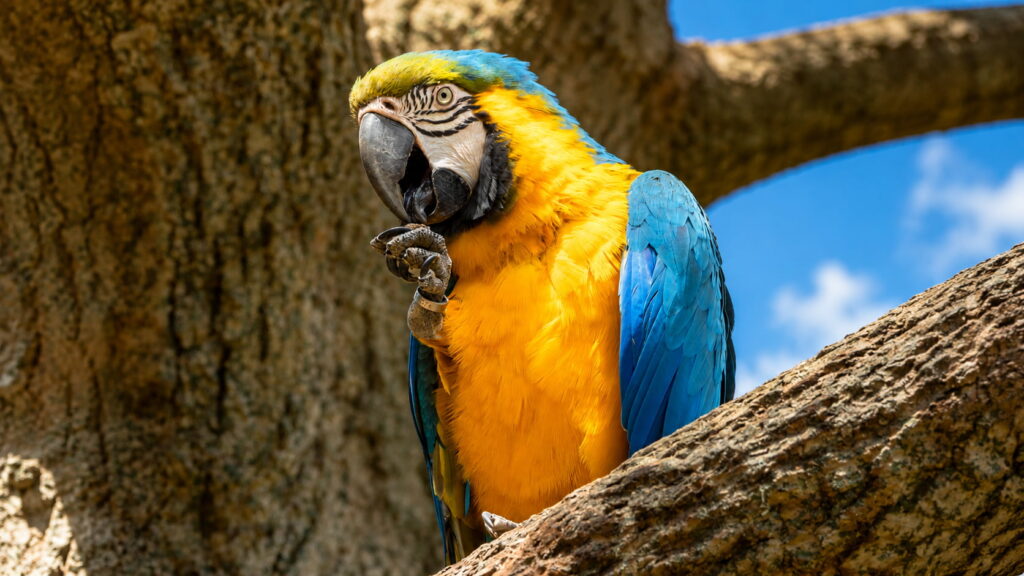
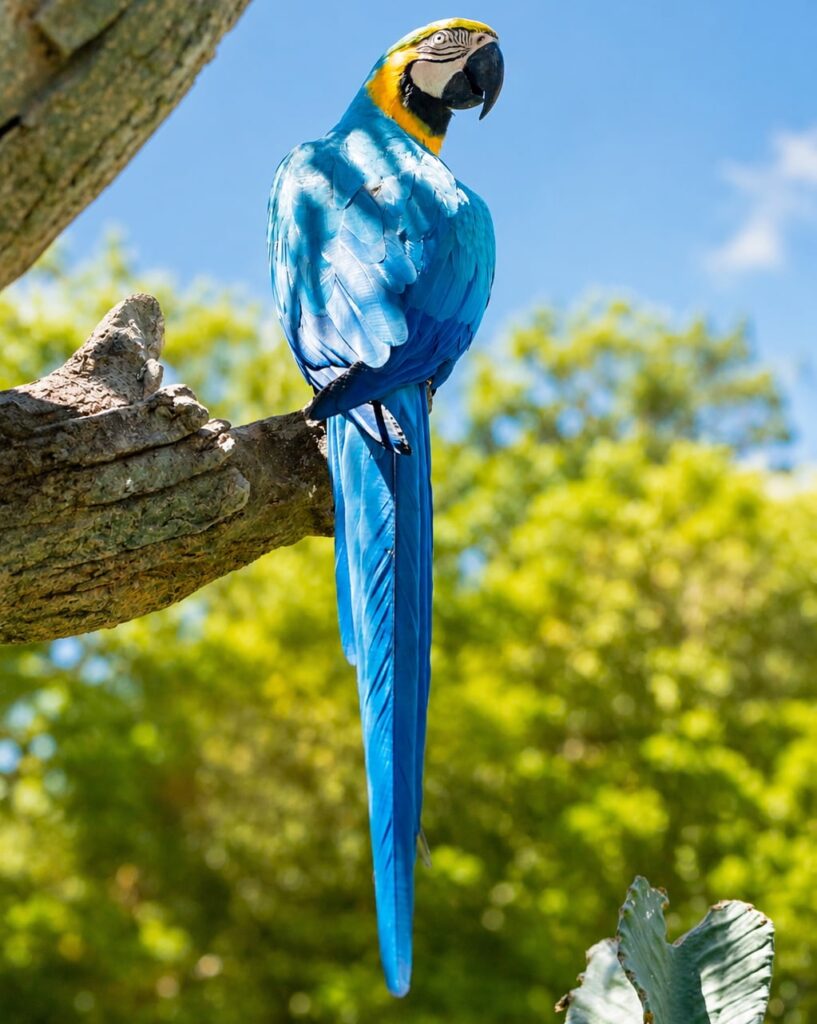
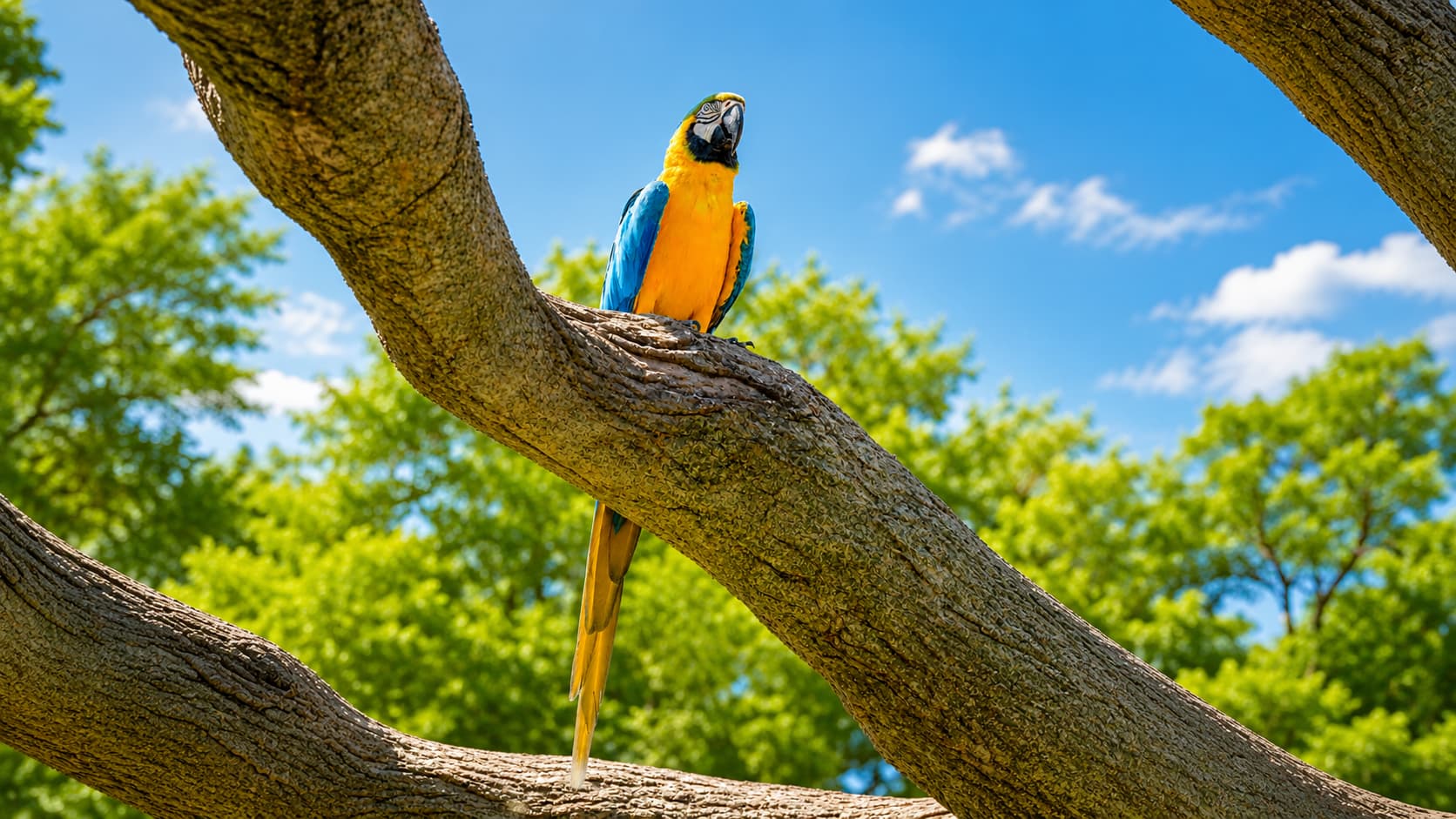
The blue-and-yellow macaw (Ara ararauna) displays bright blue plumage on the back, wings and tail, while the chest and belly are an intense yellow. The forehead and crown are greenish, and the bare facial skin is white with fine black lines formed by small feathers. The upper side of the tail is blue, while the underside has a yellowish tone.
This species feeds on a wide variety of seeds, fruits, flowers and leaves from different plant species. Thanks to its powerful beak, it can handle and consume many types of food.
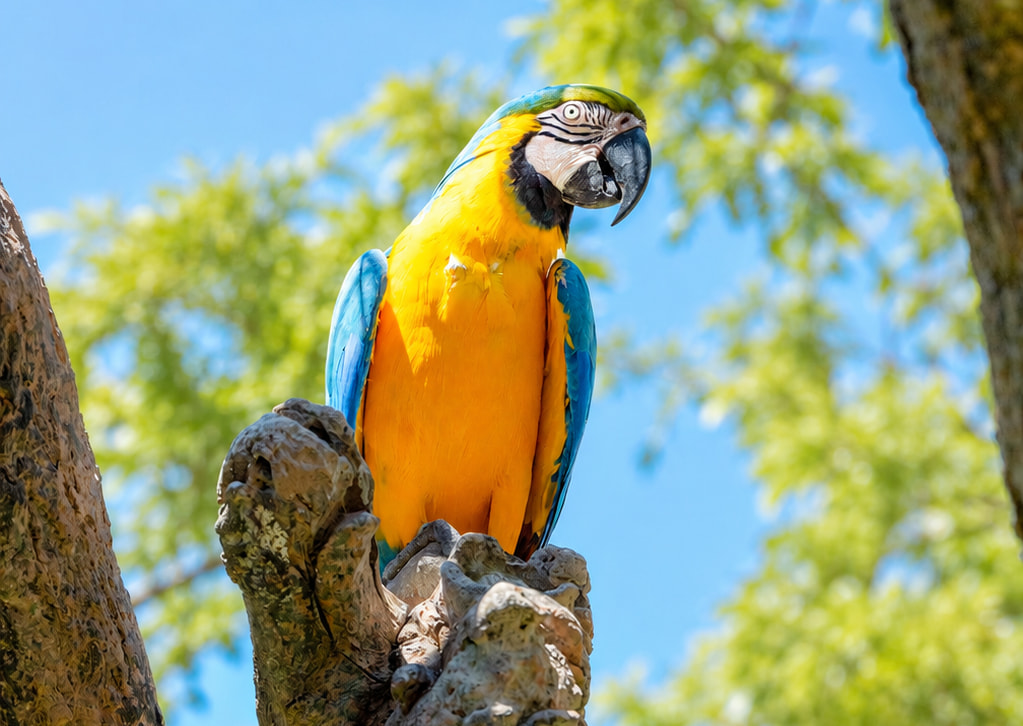
Like most macaws, it is a diurnal and social species that can be observed in pairs, although they may also form much larger groups. They maintain a strong bond with their partner and are monogamous.
They gather in groups along riverbanks to ingest clay (geophagy). This behaviour has been associated both with the neutralisation of plant toxins present in certain foods and with the intake of essential minerals.

Blue-and-yellow macaws form monogamous pairs that may remain together for many years. They nest in natural cavities in large trees, where the female usually lays between 2 and 3 eggs.
The incubation period lasts approximately 28 days and is carried out by the female, while the male assists in defending the territory and providing food.
The chicks hatch blind and dependent, remaining in the nest for several weeks until they complete their development.
The blue-and-yellow macaw is widely distributed across Central and South America, ranging from eastern Panama to Colombia, and from Venezuela to Brazil and northern Bolivia. It may also occur in Paraguay and northern Argentina, and has become extinct in Trinidad and Tobago, where reintroduction efforts have recently been carried out.
It is a species that inhabits tropical forests, particularly swampy and riverine areas. It is associated with ecosystems containing large trees, especially palms, whose cavities it uses for nesting. From elevated positions, it is able to avoid predators.
Conservation status
Great longevity
Powerful communication
High cognitive ability
Like other parrots, it possesses a strong capacity for learning and problem-solving, reflecting a high level of cognitive development among birds
As part of our educational and awareness work on biodiversity, we have developed an encyclopaedia about cetaceans. This comprehensive document offers scientific data and insights into their behaviour, as well as the myths and facts surrounding these fascinating animals.

Certificado de bienestar animal de la Asociación Británica de Agentes de Viajes (ABTA)

Certificado Europeo por la Responsabilidad Ambiental desde 2005

Certificado Humane Conservation con la máxima calificación al mejor parque zoológico de Europa American Humane Association (AHA) EEUU

Certificados desde 2008 por el Instituto de Turismo Responsable y desde 2021 cumpliendo con las acciones Biosphere LifeStyle alineadas con los 17 Objetivos de Desarrollo Sostenible de la Agenda 2030 de las Naciones Unidas

ISO 9001 – Certificado TUV Rheinland Sistema de gestión de calidad certificado respecto a la norma ISO 9001 desde 2013 ISO 14001 y Certificado TUV Rheinland por el alto respeto al Medio Ambiente desde 2005