Blue-winged Macaw
Primolius maracana
Primolius maracana
The blue-winged macaw (Primolius maracana), also known as Illiger’s macaw, is one of the smaller macaw species native to South America. The species inhabits a variety of forest environments, where the birds play an important role in seed dispersal and, consequently, contribute to the natural regeneration of these ecosystems.
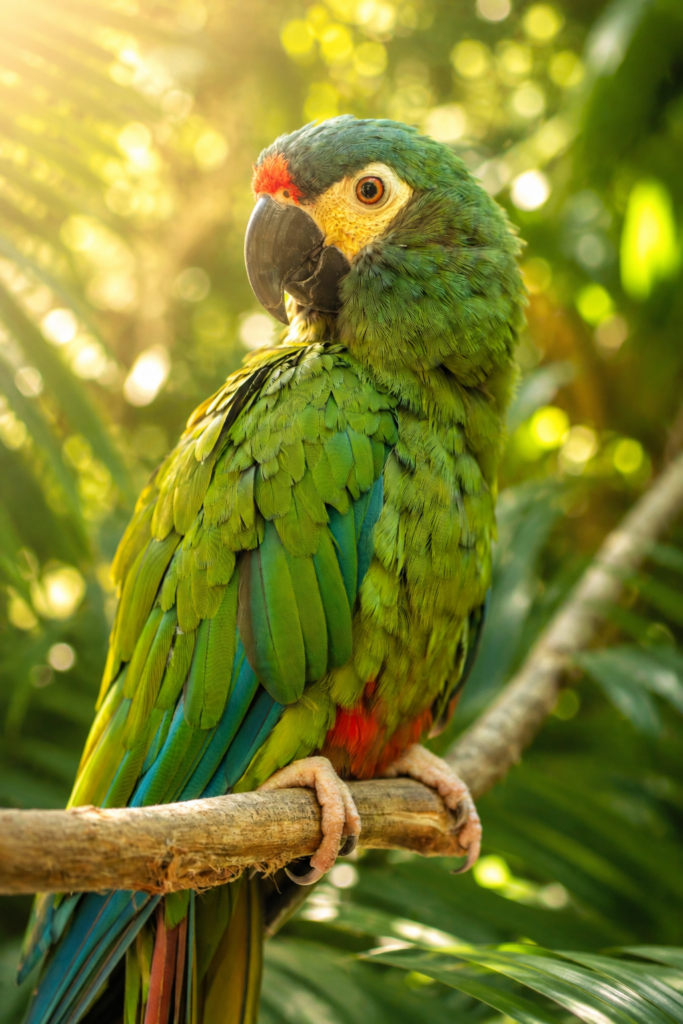
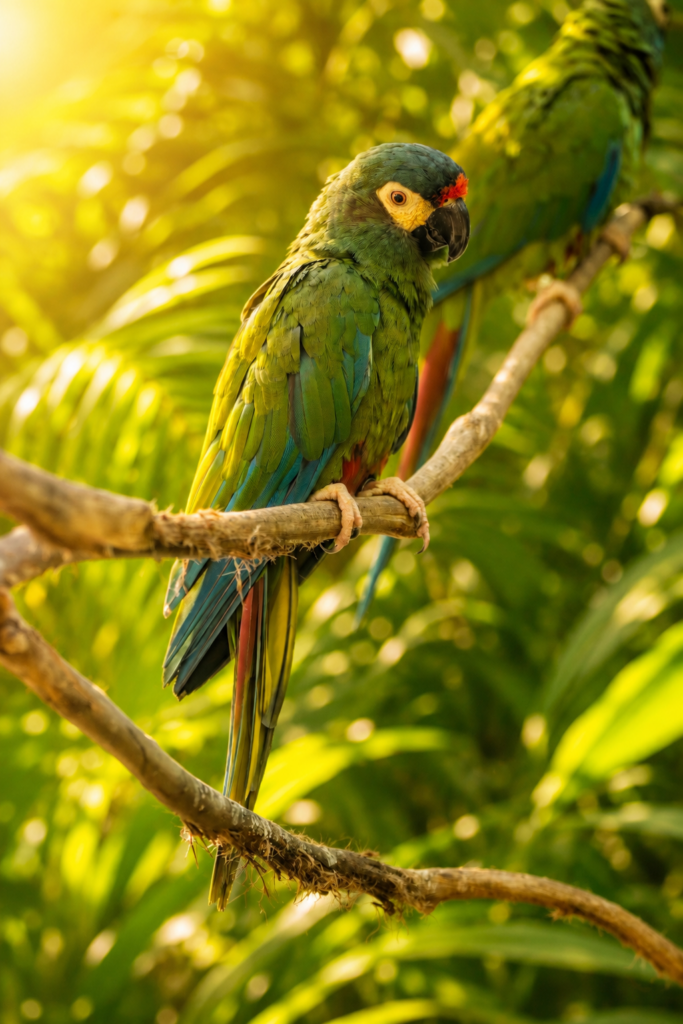
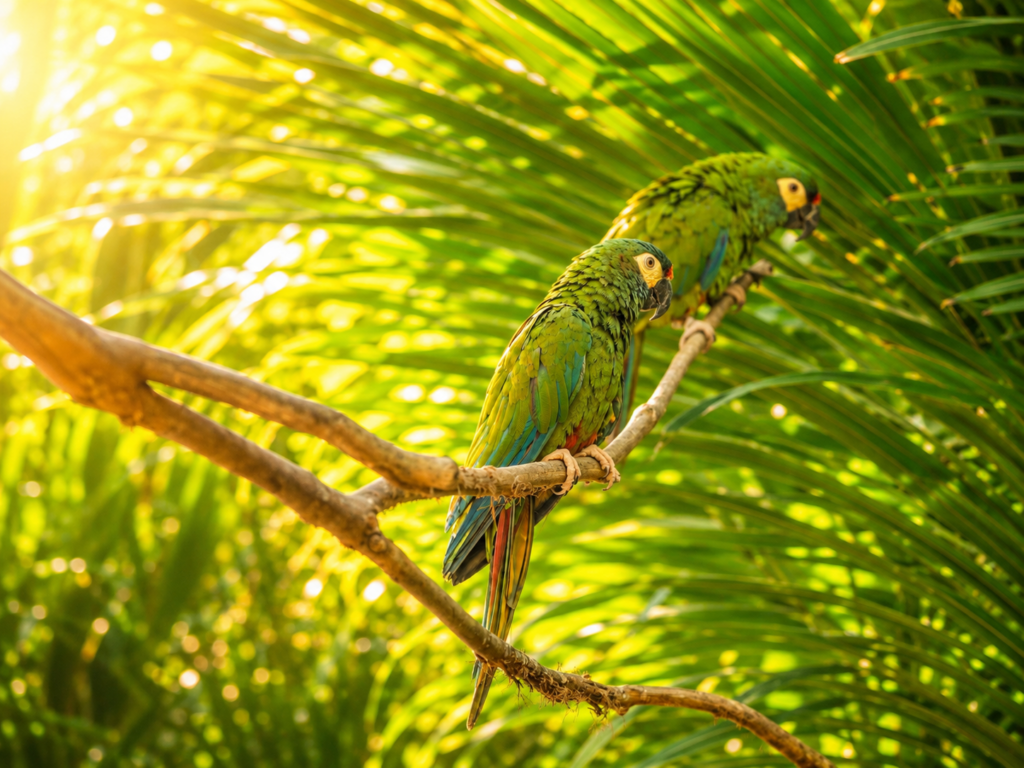
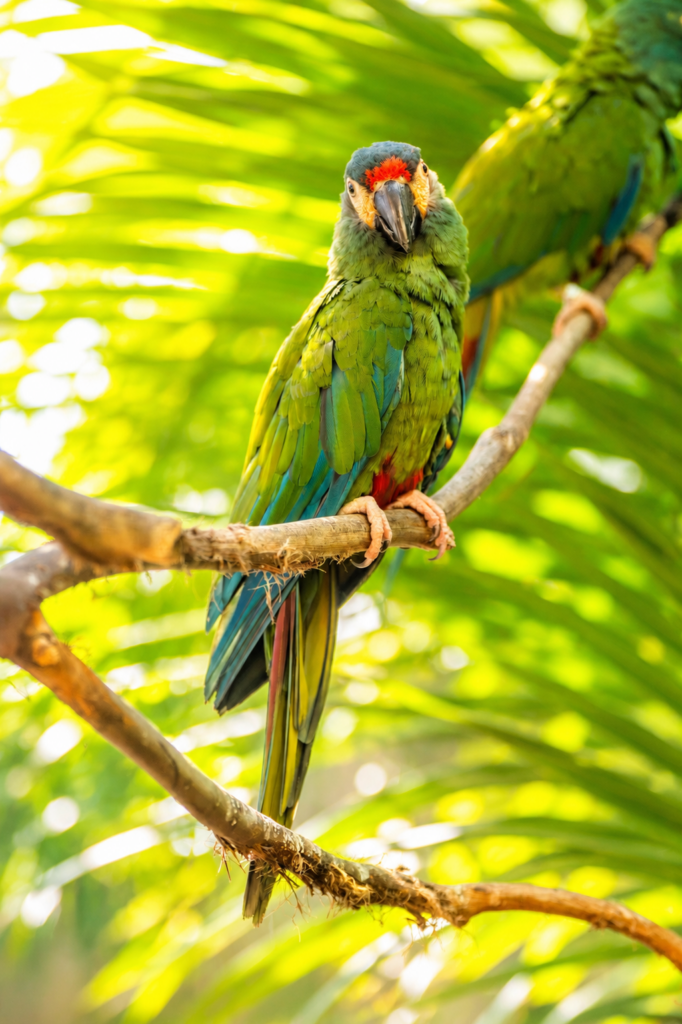
The combination of bright green plumage, the characteristic red patch on the lower abdomen and the deep blue colouring of the wings and tail makes the blue-winged macaw easy to recognise. Although the species is not currently considered globally threatened, protecting natural habitats remains essential to maintaining stable wild populations.


WEIGHT
Between 246g and 266g

DIET
Herbivorous

ORIGIN
South America

INCUBATION
26–27 days
WEIGHT
Between 246g and 266g
DIET
Herbivorous
ORIGIN
South America
INCUBACIÓN
26 – 27 días
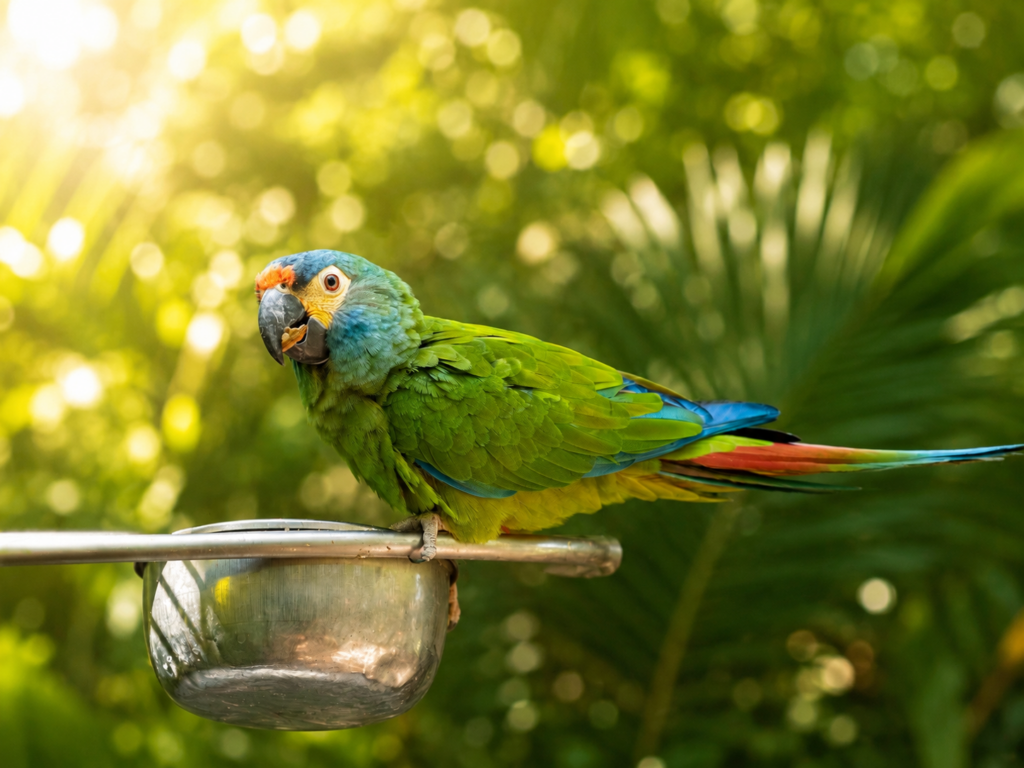
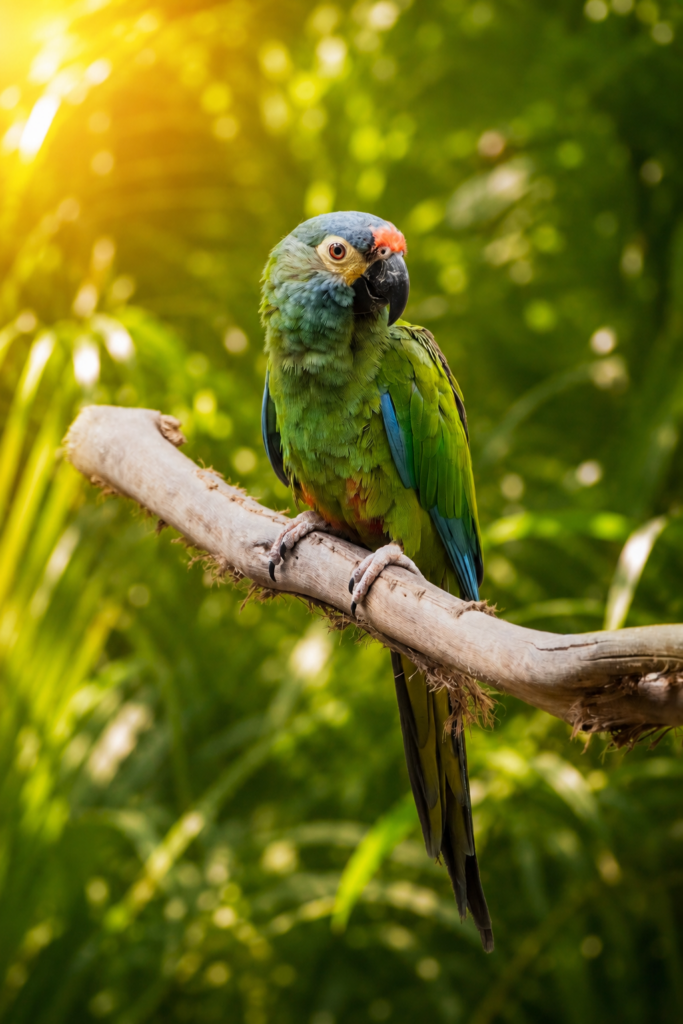
Primolius maracana is considered a small macaw species, with predominantly green plumage complemented by bluish tones across the wings and tail. Most distinctive, however, is the red colouring on the lower belly, forehead and back. The upper side of the tail is blue, whereas the base has a reddish hue. Younger birds, by comparison, display less pronounced red colouring.
Like all macaws, the blue-winged macaw has a strong, curved beak, well adapted to opening hard-shelled fruits and seeds. In addition, zygodactyl feet, with two toes pointing forwards and two backwards, allow the bird to grasp food securely and move with remarkable agility through the branches.
Although much remains unknown about the diet of the blue-winged macaw, available information suggests that fruits, seeds and flowers make up the majority of the food consumed. In addition, the species may visit cultivated areas in search of food.
Feeding behaviour also has an important ecological function. By consuming fruit and moving between different areas of forest, Primolius maracana contributes to seed dispersal and, in turn, plays a valuable role in ecosystem regeneration.

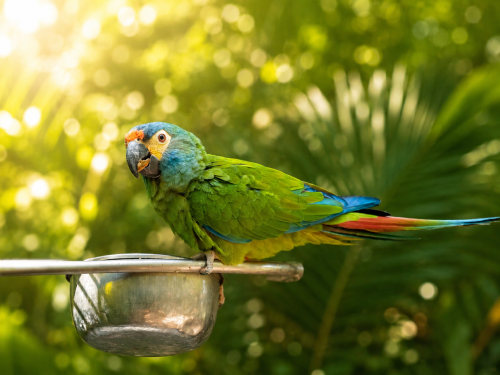
The blue-winged macaw is a largely sedentary species, generally remaining within the same area and rarely undertaking long-distance movements. Birds are usually seen in pairs or small groups, flying through the vegetation.
Another distinctive feature is the species’ flight call. The calls are fairly melodious and closely resemble those of Primolius couloni, although those of the blue-winged macaw are slightly higher-pitched.

During the breeding season, blue-winged macaw pairs nest mainly in natural cavities in large trees. Clutches generally contain three to four eggs, with incubation lasting approximately 26–27 days.
Both parents take part in caring for the young. However, while the female spends most of the incubation period on the eggs, the male is responsible for providing food.
Under human care, the blue-winged macaw breeds relatively readily. Consequently, the species is included in international breeding programmes that help maintain a genetically diverse reserve population as part of wider conservation efforts.

The blue-winged macaw occurs primarily in Brazil, with populations also found in eastern Paraguay. Historically, the species was also recorded in north-eastern Argentina, where the population is now probably extinct.
Within ecosystems such as the Atlantic Forest and Cerrado savanna, Primolius maracana favours evergreen and deciduous forests. In the Caatinga region, meanwhile, gallery forests are preferred, although the species can also adapt to drier habitats. Overall, the blue-winged macaw occurs from sea level to approximately 1,000 metres above sea level.

The blue-winged macaw is classified as Least Concern (LC) by the International Union for Conservation of Nature (IUCN).
Across the species’ range, the population is considered stable. Nevertheless, illegal capture for trade remains a potential threat, while persecution linked to feeding in agricultural areas may also have a negative impact on local populations.
A distinctive face
A variety of names
A long lifespan

As part of our educational and informative work on biodiversity, we have created an encyclopedia dedicated to cetaceans. This comprehensive resource brings together scientific facts and insights into their behaviour, as well as the myths and truths surrounding these remarkable animals.

Certificado de bienestar animal de la Asociación Británica de Agentes de Viajes (ABTA)

Certificado Europeo por la Responsabilidad Ambiental desde 2005

Certificado Humane Conservation con la máxima calificación al mejor parque zoológico de Europa American Humane Association (AHA) EEUU

Certificados desde 2008 por el Instituto de Turismo Responsable y desde 2021 cumpliendo con las acciones Biosphere LifeStyle alineadas con los 17 Objetivos de Desarrollo Sostenible de la Agenda 2030 de las Naciones Unidas

ISO 9001 – Certificado TUV Rheinland Sistema de gestión de calidad certificado respecto a la norma ISO 9001 desde 2013 ISO 14001 y Certificado TUV Rheinland por el alto respeto al Medio Ambiente desde 2005