Madagascar is a place unlike any other on Earth. Separated from the African continent millions of years ago, the island became a natural laboratory of evolution, giving rise to species found nowhere else on the planet. Among them, lemurs stand out as one of Madagascar’s greatest biological and cultural treasures.
Today, however, these remarkable primates face a critical situation. Deforestation, illegal wildlife trade and growing human pressure have placed their survival at serious risk. Understanding them is the first step towards protecting them.
What is a ring-tailed lemur?
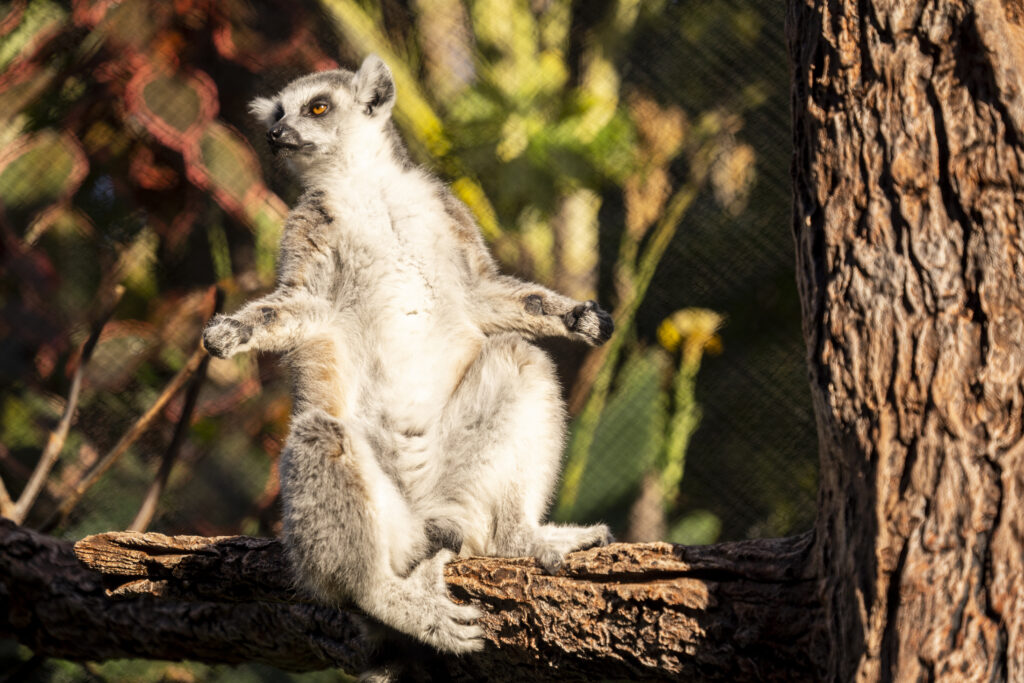
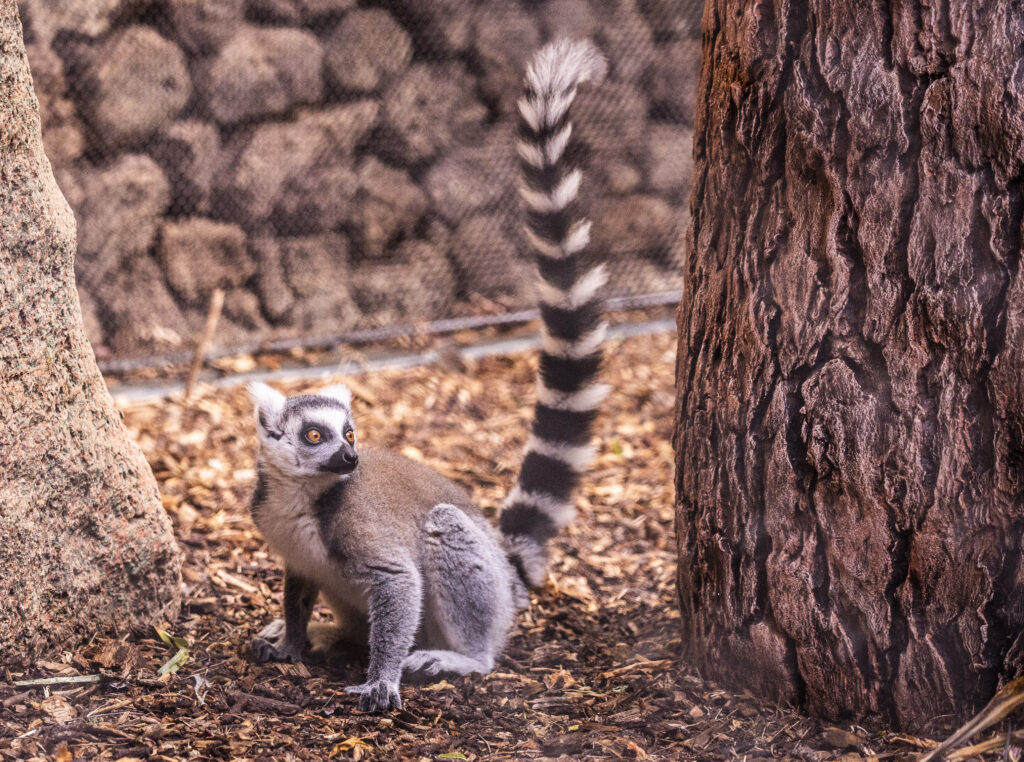
The ring-tailed lemur (Lemur catta) is one of Madagascar’s most recognisable and emblematic species. Instantly identifiable by its long tail marked with alternating black and white rings, it has become a symbol of the island’s extraordinary biodiversity.
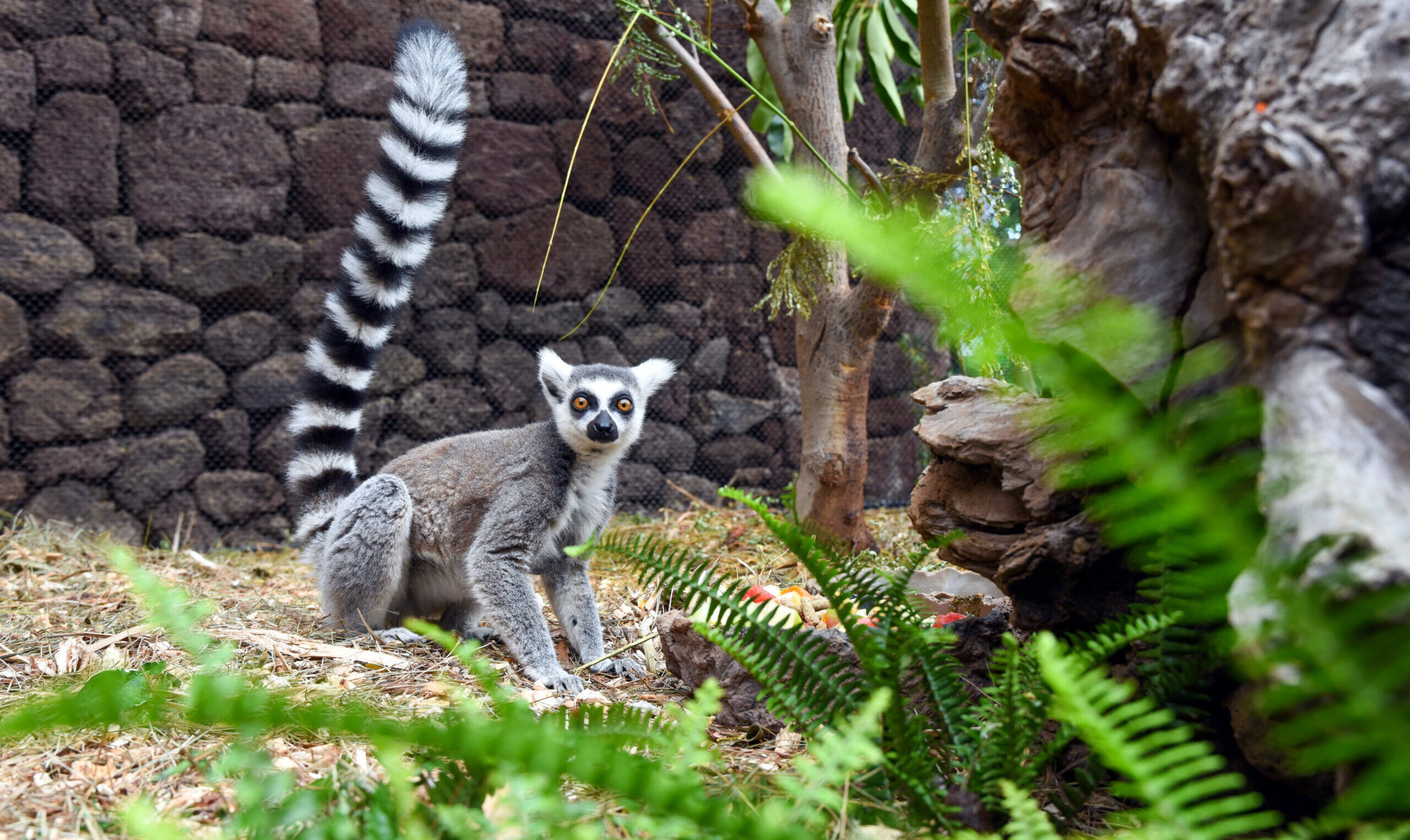
A ring-tailed lemur explores its surroundings among vegetation and rock formations.
Unlike many other primates, this species is diurnal and spends a significant amount of time on the ground, moving both across open terrain and through trees. From head to tail, it measures roughly one metre, making it a medium-sized species within the diverse lemur group.
The characteristics of a truly unique primate
Among the defining traits of the ring-tailed lemur are a series of remarkable adaptations:
- They are highly social animals, living in groups of approximately 12 to 30 individuals, although larger groups may occur.
- They live in matriarchal societies in which females dominate males. Males leave their natal groups upon reaching sexual maturity, between 2.5 and 3 years of age, and may change groups every three to five years thereafter.
- They use scent glands to mark their home ranges, communicating through chemical signals. Males also use scent marking during territorial displays and aggressive encounters.
- They possess a reflective layer behind the retina, known as the tapetum lucidum, which enables them to see efficiently in low-light conditions.
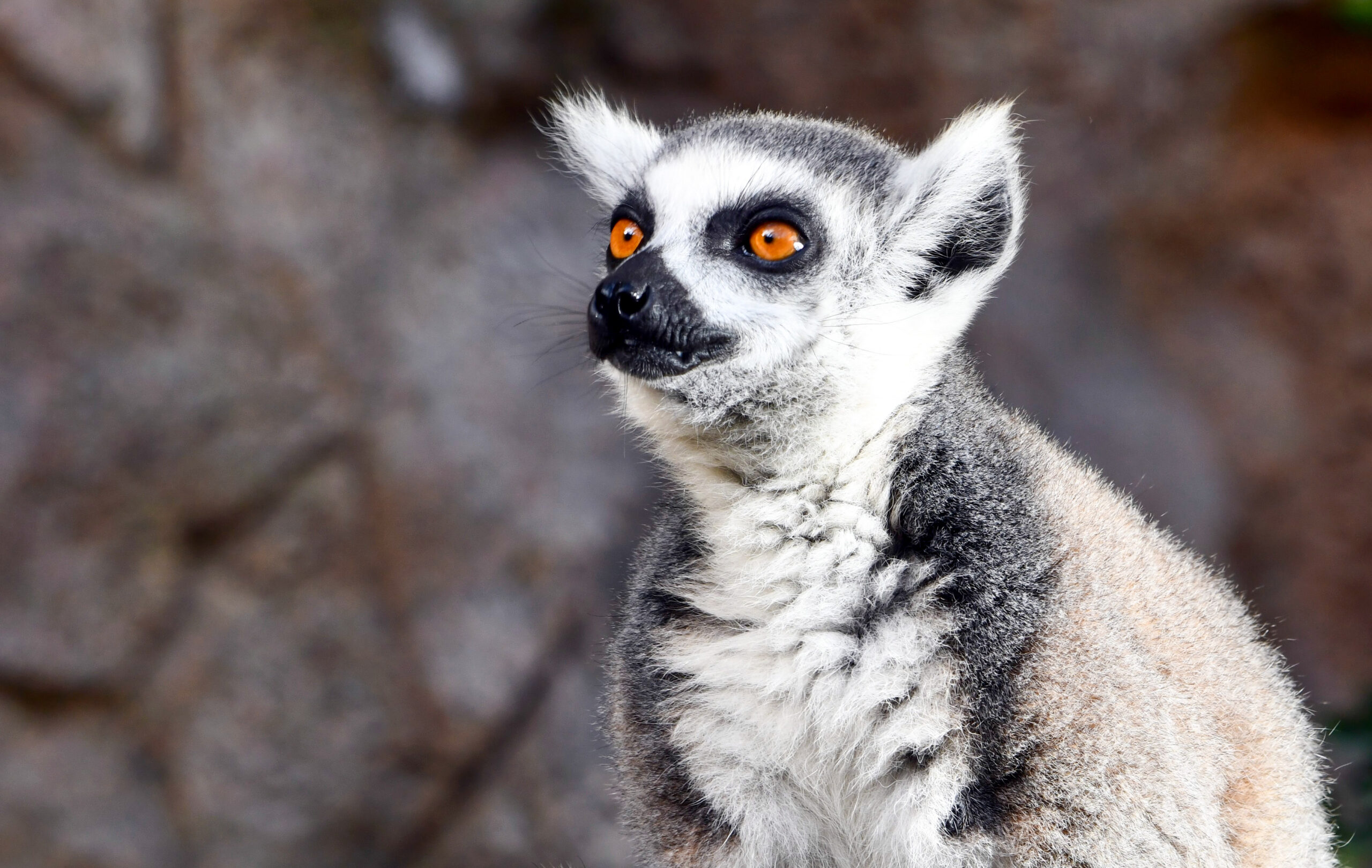
These adaptations allowed ring-tailed lemurs to thrive for thousands of years in a challenging environment. Today, however, they are no longer sufficient to counteract the unprecedented pace of human-driven change.
Types of lemur: an extraordinary diversity
Madagascar is home to 112 recognised species and subspecies of lemur, making them one of the most diverse primate groups in the world. Lemurs range from small, strictly nocturnal species to larger, predominantly diurnal ones such as the ring-tailed lemur.
Each species occupies a distinct ecological niche and plays a crucial role in maintaining ecosystem balance, particularly through seed dispersal and forest regeneration.
Where do lemurs live and what do they eat?
These strepsirrhine primates (wet-nosed primates) are found exclusively in Madagascar, where they inhabit a wide variety of ecosystems, including dry forests, tropical rainforests, spiny forests, scrublands and rocky forests. While their distribution varies by species, all lemurs share a strong dependence on forested habitats.
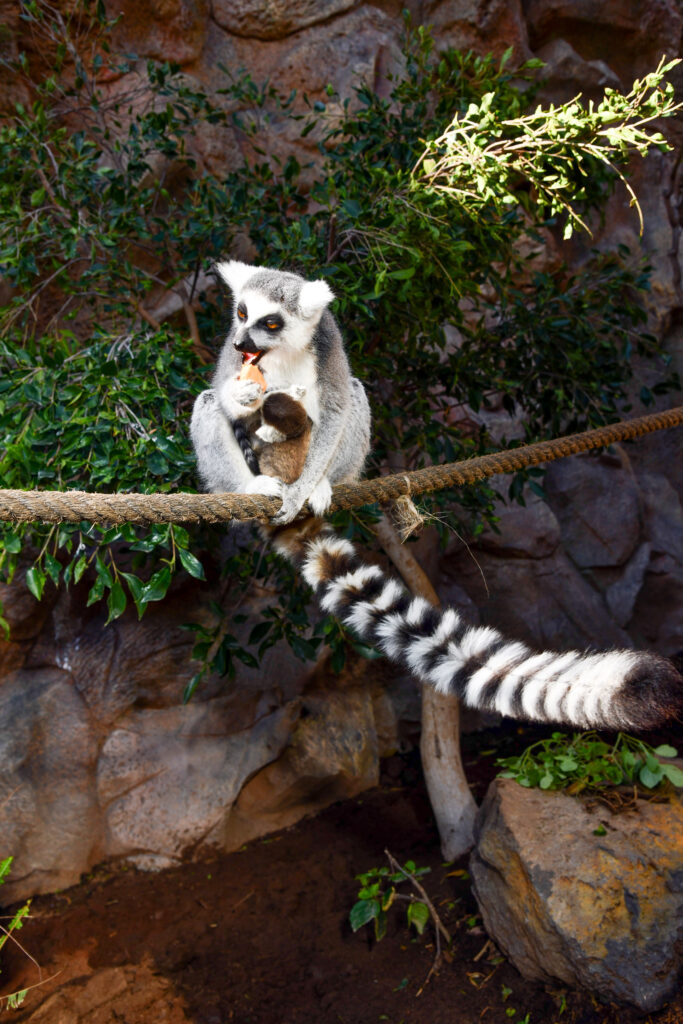
Their diet also varies according to species and season. Lemurs may feed on fruit, leaves, bark, insects and other food sources. This dietary diversity allows different species to adapt to specific ecological niches, although ongoing habitat loss is increasingly restricting their access to food.
How many ring-tailed lemurs are left?
Providing an exact figure is difficult, but the overall trend is unmistakable: populations have declined dramatically in recent decades.
The IUCN currently classifies the ring-tailed lemur as Endangered, and many other lemur species are already listed in even more critical categories. Deforestation for charcoal production, agricultural expansion, hunting and the illegal pet trade are among the main threats facing these animals in the wild.
Loro Parque’s role in lemur conservation
Loro Parque is an international benchmark in the protection of endangered species. In recent years, the park has achieved significant progress in primate conservation, as evidenced by the birth of three ring-tailed lemurs — a milestone that reinforces its commitment to biodiversity.
This achievement, together with other recent births of threatened species, highlights the success of its breeding programmes and its close collaboration with international initiatives aimed at securing the future of Madagascar’s iconic primates.
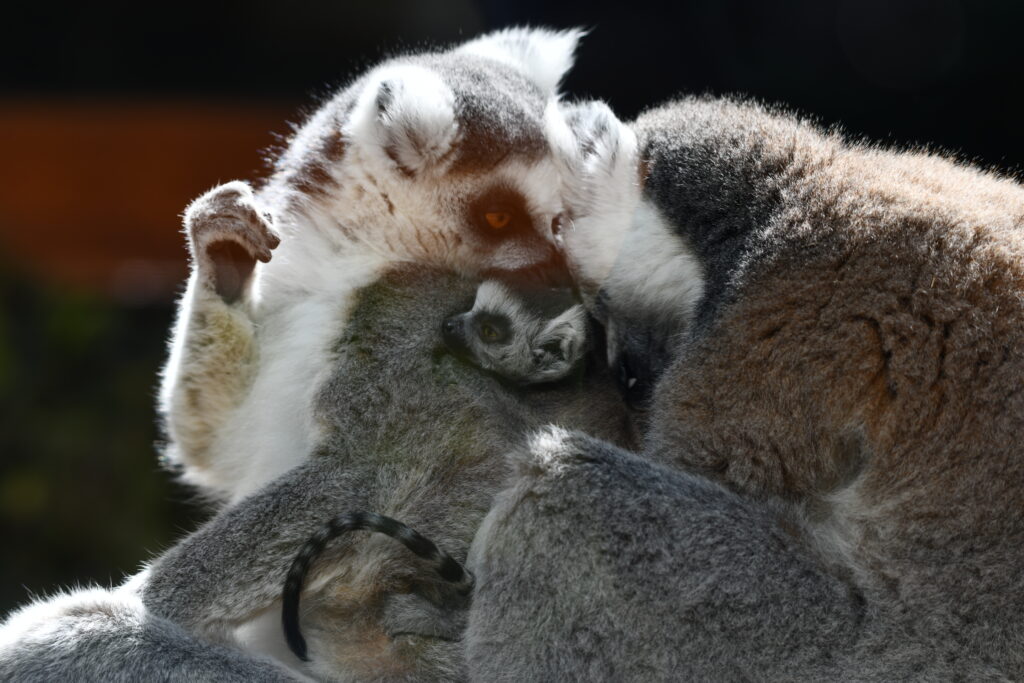
Each birth represents renewed hope and an opportunity to raise awareness of the urgent need to protect some of the planet’s most fragile ecosystems.