Lear’s Macaw
Anodorhynchus leari
Anodorhynchus leari
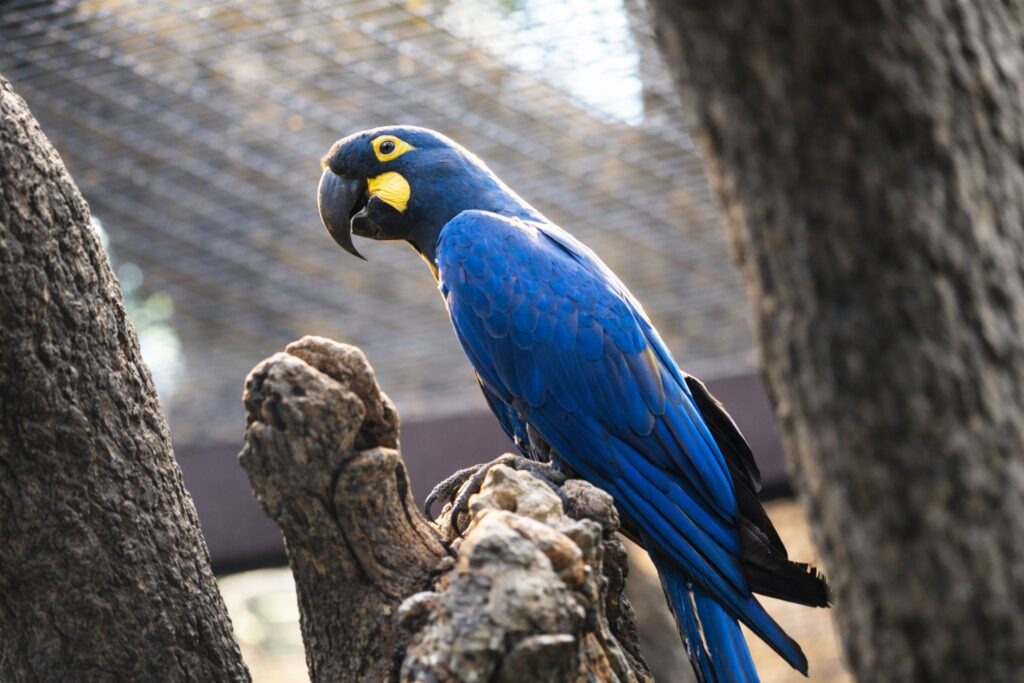
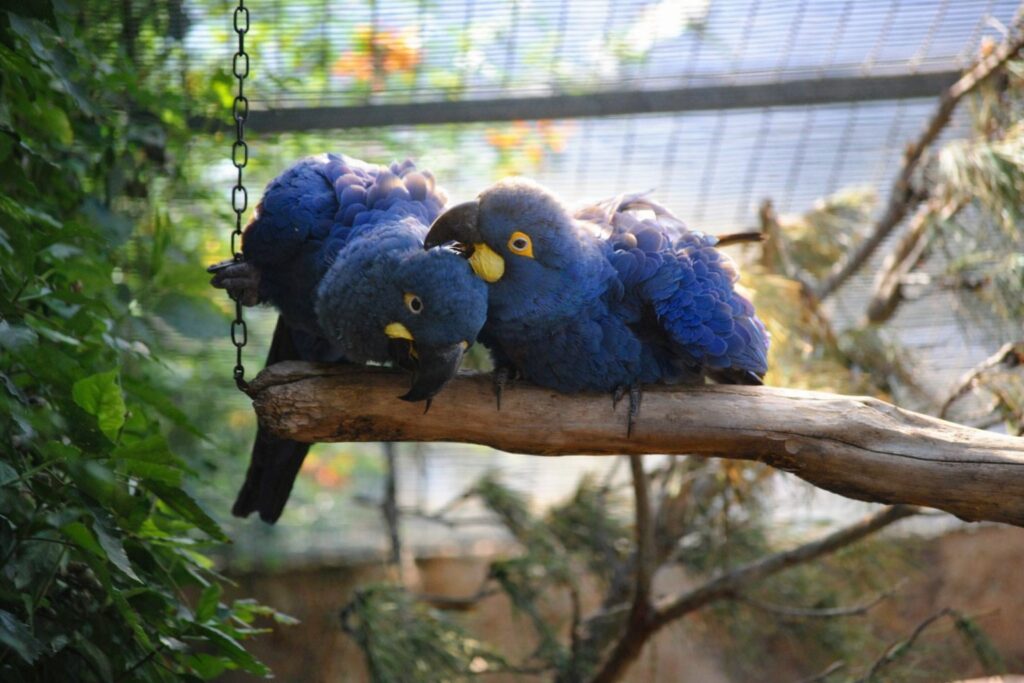
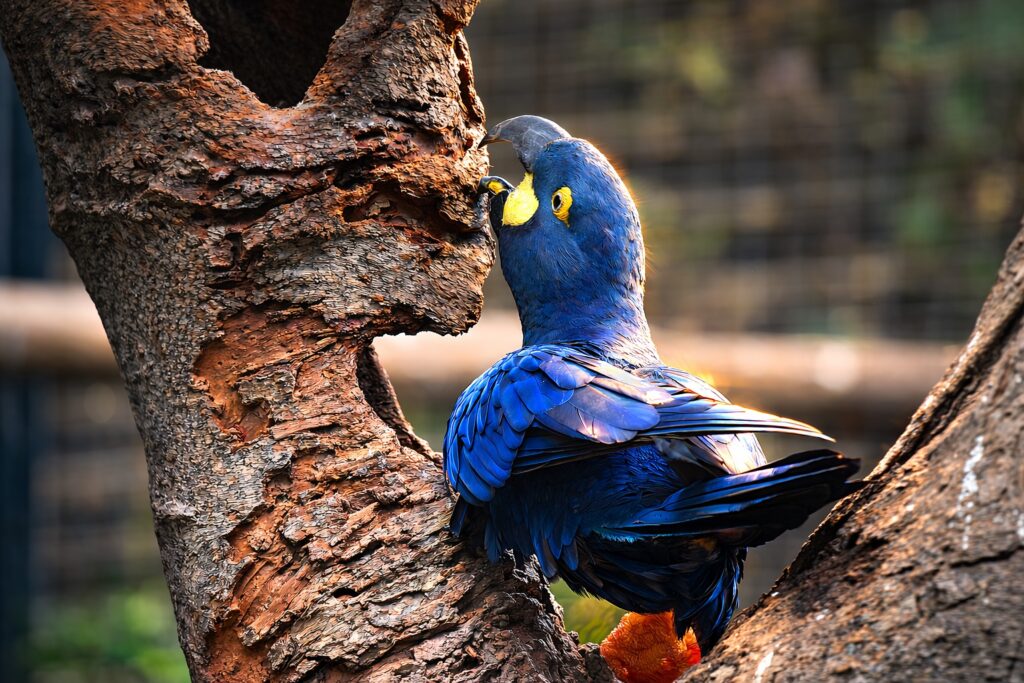
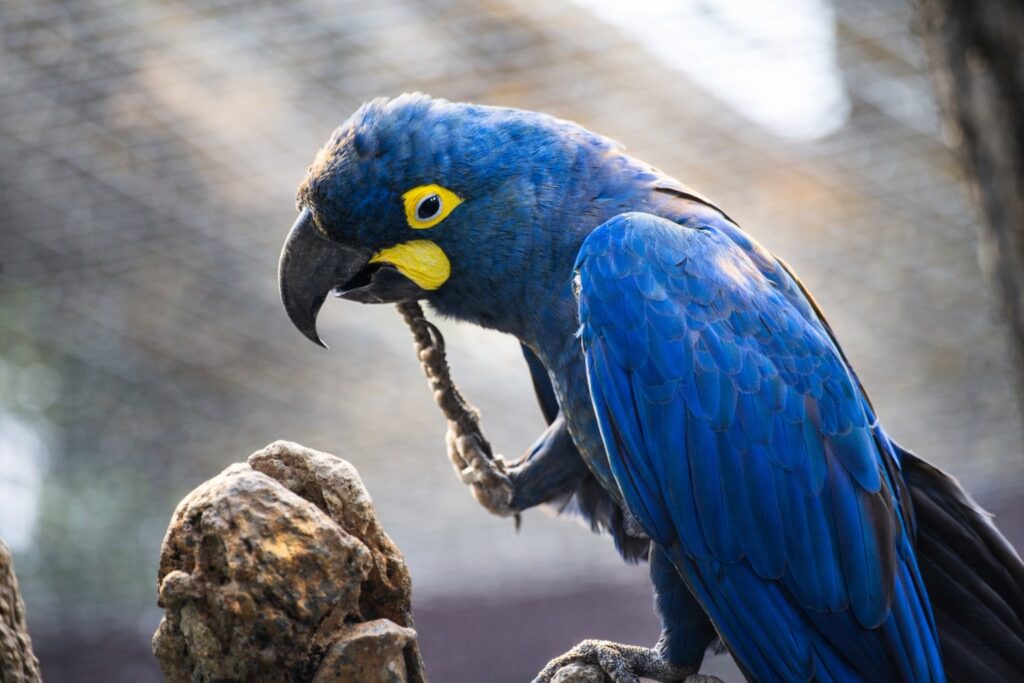
The Lear’s macaw (Anodorhynchus leari), also known as the indigo macaw, is recognised as one of the world’s rarest and most endangered bird species. With its striking deep-blue plumage, powerful black beak and distinctive yellow patches of bare skin around the eyes, it has become a true symbol of the biodiversity of north-eastern Brazil.
Thanks to the work carried out by Loro Parque Fundación, this remarkable species has gone from the brink of extinction to becoming an internationally recognised conservation success story.

WEIGHT
Between 940 and 950 g

DIET
Herbivorous (mainly granivorous and frugivorous)

ORIGIN
Brazil

INCUBATION
26 – 28 days
26 – 28 days
Borrado:
WEIGHT
Between 940 and 950 g
ALIMENTACIÓN
Herbívora (frugívora-granívora)
ORIGEN
Brasil
INCUBACIÓN
26 – 28 días
This species is particularly notable for the intense blue colouring that covers most of its body. The head and neck display greenish-blue shades, while the upperparts feature subtle purplish tones blending into the blue plumage. Another distinctive feature is the bright yellow eye ring, together with the fleshy yellow patches located at the sides of the lower mandible, which are usually a paler shade of yellow. The beak is black or dark grey, and the eyes are brown.
As with most parrot species, Lear’s macaws do not exhibit sexual dimorphism, meaning males and females look alike. The main differences are seen in younger birds, which tend to have shorter tails and paler skin around the beak and eyes. Adults generally measure between 70 and 75 cm in length and weigh around 940 to 950 grams.
Their diet consists mainly of fruits, flowers and seeds from various plant species associated with the Caatinga ecosystem. However, above all other food sources, they rely heavily on the fruit of the licuri palm. In addition to feeding on these fruits, Lear’s macaws play an essential ecological role as seed dispersers, helping to maintain and regenerate their natural habitat.


Lear’s macaws are diurnal and highly social birds , constantly communicating through loud vocalisations that strengthen social bonds and help coordinate the flock. They typically form colonies of between 20 and 30 individuals and make use of the characteristic sandstone cliffs found throughout the Caatinga as communal roosting sites , which also serve as nesting and breeding areas. These roosts are usually very stable, allowing colonies to occupy them continuously for long periods of time.
Interestingly, observations of the species have revealed that certain individuals within the flock may move ahead of the group , acting as scouts by inspecting the surrounding area for potential predators before the rest of the flock follows.

Lear’s macaws form long-lasting pair bonds and maintain monogamous relationships throughout their lives. Each breeding pair may lay between two and three eggs in clay cavities located within the sandstone cliffs where they nest. Both parents are involved in raising the chicks: the female incubates the eggs while the male feeds her during this period. Once the chicks hatch, both adults share the responsibility of feeding and caring for them. Even after leaving the nest, the young birds remain under the supervision of their parents, learning the feeding and flying behaviours necessary for survival.

Lear’s macaw is found exclusively in north-eastern Brazil, specifically within the state of Bahia. The species is closely associated with the Caatinga, a semi-arid ecosystem dominated by thorny scrub vegetation, grassland areas and licuri palm groves. The region is also characterised by sandstone cliffs, which are essential for the species’ nesting and breeding behaviour.

Conservation status
A tribute with blue wings
The Caatinga’s best-kept secret
A specialist in licurí

Loro Parque Fundación coordinates one of the most successful programmes dedicated to the recovery of this species. Since 2006, the foundation has bred more than 55 Lear’s macaws at its facilities in Tenerife and has reintroduced twelve individuals into Brazil after carefully preparing them for survival in natural conditions.
Meanwhile, Loro Parque, as a world-leading modern zoo specialising in conservation, provides the specialised infrastructure and breeding facilities where the first chicks hatched only six months after the arrival of breeding pairs sent from Brazil. This ex situ conservation work proved essential in creating the genetic reserve that ultimately saved the species from functional extinction, allowing reintroduced pairs to breed successfully in the Caatinga. For example, in 2024, five chicks were born in Brazil from reintroduced individuals originating from Loro Parque Fundación.
In addition, the foundation supports compensation projects for farmers affected by crop damage and strengthens conservation initiatives focused on the licuri palm, ensuring a reliable food source for wild populations. Thanks to the joint efforts of Loro Parque, Loro Parque Fundación and the Brazilian authorities, the wild population has increased to more than 2,400 recorded individuals by 2024.
As part of our work to raise awareness and provide education on biodiversity, we have compiled an encyclopaedia on cetaceans. It is a comprehensive resource containing facts and scientific information on the behaviour of these animals, as well as the myths and truths surrounding them.

Certificado de bienestar animal de la Asociación Británica de Agentes de Viajes (ABTA)

Certificado Europeo por la Responsabilidad Ambiental desde 2005

Certificado Humane Conservation con la máxima calificación al mejor parque zoológico de Europa American Humane Association (AHA) EEUU

Certificados desde 2008 por el Instituto de Turismo Responsable y desde 2021 cumpliendo con las acciones Biosphere LifeStyle alineadas con los 17 Objetivos de Desarrollo Sostenible de la Agenda 2030 de las Naciones Unidas